Legislators
Overview
SaveJob Zone Four: Considerable Preparation Needed
Experience
A considerable amount of work-related skill, knowledge, or experience is needed for these occupations. For example, an accountant must complete four years of college and work for several years in accounting to be considered qualified.
Education
Most of these occupations require a four-year bachelor's degree, but some do not.
Job Training
Employees in these occupations usually need several years of work-related experience, on-the-job training, and/or vocational training.
Examples
Many of these occupations involve coordinating, supervising, managing, or training others. Examples include real estate brokers, sales managers, database administrators, graphic designers, conservation scientists, art directors, and cost estimators.
Develop, introduce, or enact laws and statutes at the local, tribal, state, or federal level. Includes only workers in elected positions.

Yearly Salary
| High: | $105K |
| Median: | $33K |
| Low: | $18K |
Demand
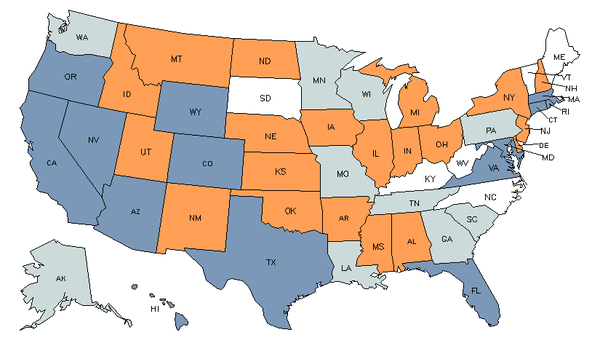
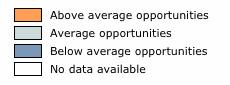
Technology Skills
Technology
Example
Hot Technology
Tools Used
Tool
Example
Detailed Work Activities
- Analyze impact of legal or regulatory changes.
- Hire personnel.
- Confer with organizational members to accomplish work activities.
- Conduct hearings to investigate legal issues.
- Maintain knowledge of current developments in area of expertise.
- Gather customer or product information to determine customer needs.
- Collect data about customer needs.
- Analyze data to inform operational decisions or activities.
- Implement organizational process or policy changes.
- Implement design or process improvements.
- Coordinate operational activities with external stakeholders.
- Draft legislation or regulations.
- Resolve customer complaints or problems.
- Represent the organization in external relations.
- Recommend organizational process or policy changes.
- Prepare proposals or grant applications to obtain project funding.
- Serve on institutional or departmental committees.
- Present information to the public.
- Establish interpersonal business relationships to facilitate work activities.
- Compile data or documentation.
- Develop marketing plans or strategies.
- Support the professional development of others.
- Supervise employees.
- Evaluate program effectiveness.
- Manage outreach activities.
- Approve expenditures.
- Promote products, services, or programs.
Interests
Enterprising
79%
Work involves managing, negotiating, marketing, or selling, typically in a business setting, or leading or advising people in political and legal situations. Enterprising occupations are often associated with business initiatives, sales, marketing/advertising, finance, management/administration, professional advising, public speaking, politics, or law.
Social
53%
Work involves helping, teaching, advising, assisting, or providing service to others. Social occupations are often associated with social, health care, personal service, teaching/education, or religious activities.
Conventional
52%
Work involves following procedures and regulations to organize information or data, typically in a business setting. Conventional occupations are often associated with office work, accounting, mathematics/statistics, information technology, finance, or human resources.
Investigative
48%
Work involves studying and researching non-living objects, living organisms, disease or other forms of impairment, or human behavior. Investigative occupations are often associated with physical, life, medical, or social sciences, and can be found in the fields of humanities, mathematics/statistics, information technology, or health care service.
Artistic
39%
Work involves creating original visual artwork, performances, written works, food, or music for a variety of media, or applying artistic principles to the design of various objects and materials. Artistic occupations are often associated with visual arts, applied arts and design, performing arts, music, creative writing, media, or culinary art.
Realistic
22%
Work involves designing, building, or repairing of equipment, materials, or structures, engaging in physical activity, or working outdoors. Realistic occupations are often associated with engineering, mechanics and electronics, construction, woodworking, transportation, machine operation, agriculture, animal services, physical or manual labor, athletics, or protective services.
Work Values
Relationships
81%
Occupations that satisfy this work value allow employees to provide service to others and work with co-workers in a friendly non-competitive environment. Corresponding needs are Co-workers, Moral Values and Social Service.
Achievement
77%
Occupations that satisfy this work value are results oriented and allow employees to use their strongest abilities, giving them a feeling of accomplishment. Corresponding needs are Ability Utilization and Achievement.
Independence
72%
Occupations that satisfy this work value allow employees to work on their own and make decisions. Corresponding needs are Creativity, Responsibility and Autonomy.
Recognition
72%
Occupations that satisfy this work value offer advancement, potential for leadership, and are often considered prestigious. Corresponding needs are Advancement, Authority, Recognition and Social Status.
Working Conditions
62%
Occupations that satisfy this work value offer job security and good working conditions. Corresponding needs are Activity, Compensation, Independence, Security, Variety and Working Conditions.
Support
58%
Occupations that satisfy this work value offer supportive management that stands behind employees. Corresponding needs are Company Policies, Supervision: Human Relations and Supervision: Technical.
Colleges
SAGE Scholars Member Schools that offer majors leading to this career.
Check out the College Search to see the full list of schools with majors for this career.