Architects, Except Landscape and Naval
Overview
SaveJob Zone Five: Extensive Preparation Needed
Experience
Extensive skill, knowledge, and experience are needed for these occupations. Many require more than five years of experience. For example, surgeons must complete four years of college and an additional five to seven years of specialized medical training to be able to do their job.
Education
Most of these occupations require graduate school. For example, they may require a master's degree, and some require a Ph.D., M.D., or J.D. (law degree).
Job Training
Employees may need some on-the-job training, but most of these occupations assume that the person will already have the required skills, knowledge, work-related experience, and/or training.
Examples
These occupations often involve coordinating, training, supervising, or managing the activities of others to accomplish goals. Very advanced communication and organizational skills are required. Examples include pharmacists, lawyers, astronomers, biologists, clergy, physician assistants, and veterinarians.
Plan and design structures, such as private residences, office buildings, theaters, factories, and other structural property.

Yearly Salary
| High: | $136K |
| Median: | $82K |
| Low: | $49K |
Demand
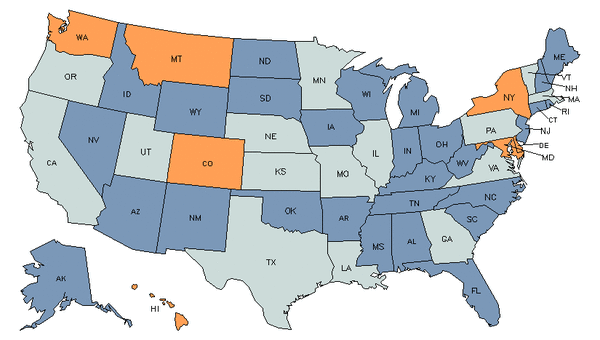
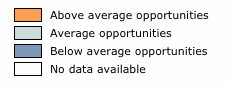
Core Tasks
- Develop final construction plans that include aesthetic representations of the structure or details for its construction.
- Prepare scale drawings or architectural designs, using computer-aided design or other tools.
- Consult with clients to determine functional or spatial requirements of structures.
- Meet with clients to review or discuss architectural drawings.
- Prepare information regarding design, structure specifications, materials, color, equipment, estimated costs, or construction time.
- Integrate engineering elements into unified architectural designs.
- Monitor the work of specialists, such as electrical engineers, mechanical engineers, interior designers, or sound specialists to ensure optimal form or function of designs or final structures.
- Plan layouts of structural architectural projects.
- Conduct periodic on-site observations of construction work to monitor compliance with plans.
- Plan or design structures such as residences, office buildings, theatres, factories, or other structural properties in accordance with environmental, safety, or other regulations.
- Prepare contract documents for building contractors.
- Direct activities of technicians engaged in preparing drawings or specification documents.
- Administer construction contracts.
- Create three-dimensional or interactive representations of designs, using computer-assisted design software.
- Represent clients in obtaining bids or awarding construction contracts.
- Develop marketing materials, proposals, or presentations to generate new work opportunities.
- Perform predesign services, such as feasibility or environmental impact studies.
- Design structures that incorporate environmentally friendly building practices or concepts, such as Leadership in Energy and Environmental Design (LEED) standards.
- Design or plan construction of green building projects to minimize adverse environmental impact or conserve energy.
- Gather information related to projects' environmental sustainability or operational efficiency.
- Inspect proposed building sites to determine suitability for construction.
- Design environmentally sound structural upgrades to existing buildings, such as natural lighting systems, green roofs, or rainwater collection systems.
- Calculate potential energy savings by comparing estimated energy consumption of proposed design to baseline standards.
- Prepare operating and maintenance manuals, studies, or reports.
Technology Skills
Technology
Example
Hot Technology
Tools Used
Tool
Example
Top 10 Knowledge Required
Design
98%
Knowledge of design techniques, tools, and principles involved in production of precision technical plans, blueprints, drawings, and models.
Building and Construction
97%
Knowledge of materials, methods, and the tools involved in the construction or repair of houses, buildings, or other structures such as highways and roads.
Public Safety and Security
82%
Knowledge of relevant equipment, policies, procedures, and strategies to promote effective local, state, or national security operations for the protection of people, data, property, and institutions.
Engineering and Technology
81%
Knowledge of the practical application of engineering science and technology. This includes applying principles, techniques, procedures, and equipment to the design and production of various goods and services.
Computers and Electronics
80%
Knowledge of circuit boards, processors, chips, electronic equipment, and computer hardware and software, including applications and programming.
English Language
79%
Knowledge of the structure and content of the English language including the meaning and spelling of words, and rules of composition and grammar.
Administration and Management
78%
Knowledge of business and management principles involved in strategic planning, resource allocation, human resources modeling, leadership technique, production methods, and coordination of people and resources.
Customer and Personal Service
77%
Knowledge of principles and processes for providing customer and personal services. This includes customer needs assessment, meeting quality standards for services, and evaluation of customer satisfaction.
Law and Government
69%
Knowledge of laws, legal codes, court procedures, precedents, government regulations, executive orders, agency rules, and the democratic political process.
Mathematics
68%
Knowledge of arithmetic, algebra, geometry, calculus, statistics, and their applications.
Top 10 Skills
Critical Thinking
80%
Using logic and reasoning to identify the strengths and weaknesses of alternative solutions, conclusions, or approaches to problems.
Operations Analysis
80%
Analyzing needs and product requirements to create a design.
Reading Comprehension
80%
Understanding written sentences and paragraphs in work-related documents.
Speaking
80%
Talking to others to convey information effectively.
Active Listening
78%
Giving full attention to what other people are saying, taking time to understand the points being made, asking questions as appropriate, and not interrupting at inappropriate times.
Writing
78%
Communicating effectively in writing as appropriate for the needs of the audience.
Complex Problem Solving
75%
Identifying complex problems and reviewing related information to develop and evaluate options and implement solutions.
Judgment and Decision Making
75%
Considering the relative costs and benefits of potential actions to choose the most appropriate one.
Monitoring
75%
Monitoring/Assessing performance of yourself, other individuals, or organizations to make improvements or take corrective action.
Active Learning
73%
Understanding the implications of new information for both current and future problem-solving and decision-making.
Top 10 Abilities
Visualization
83%
The ability to imagine how something will look after it is moved around or when its parts are moved or rearranged.
Category Flexibility
80%
The ability to generate or use different sets of rules for combining or grouping things in different ways.
Deductive Reasoning
80%
The ability to apply general rules to specific problems to produce answers that make sense.
Fluency of Ideas
80%
The ability to come up with a number of ideas about a topic (the number of ideas is important, not their quality, correctness, or creativity).
Inductive Reasoning
80%
The ability to combine pieces of information to form general rules or conclusions (includes finding a relationship among seemingly unrelated events).
Information Ordering
80%
The ability to arrange things or actions in a certain order or pattern according to a specific rule or set of rules (e.g., patterns of numbers, letters, words, pictures, mathematical operations).
Oral Comprehension
80%
The ability to listen to and understand information and ideas presented through spoken words and sentences.
Oral Expression
80%
The ability to communicate information and ideas in speaking so others will understand.
Originality
80%
The ability to come up with unusual or clever ideas about a given topic or situation, or to develop creative ways to solve a problem.
Problem Sensitivity
80%
The ability to tell when something is wrong or is likely to go wrong. It does not involve solving the problem, only recognizing that there is a problem.
Top 10 Work Activities
Working with Computers
94%
Using computers and computer systems (including hardware and software) to program, write software, set up functions, enter data, or process information.
Drafting, Laying Out, and Specifying Technical Devices, Parts, and Equipment
90%
Providing documentation, detailed instructions, drawings, or specifications to tell others about how devices, parts, equipment, or structures are to be fabricated, constructed, assembled, modified, maintained, or used.
Thinking Creatively
90%
Developing, designing, or creating new applications, ideas, relationships, systems, or products, including artistic contributions.
Getting Information
88%
Observing, receiving, and otherwise obtaining information from all relevant sources.
Making Decisions and Solving Problems
88%
Analyzing information and evaluating results to choose the best solution and solve problems.
Documenting/Recording Information
86%
Entering, transcribing, recording, storing, or maintaining information in written or electronic/magnetic form.
Communicating with People Outside the Organization
85%
Communicating with people outside the organization, representing the organization to customers, the public, government, and other external sources. This information can be exchanged in person, in writing, or by telephone or e-mail.
Communicating with Supervisors, Peers, or Subordinates
85%
Providing information to supervisors, co-workers, and subordinates by telephone, in written form, e-mail, or in person.
Updating and Using Relevant Knowledge
85%
Keeping up-to-date technically and applying new knowledge to your job.
Establishing and Maintaining Interpersonal Relationships
82%
Developing constructive and cooperative working relationships with others, and maintaining them over time.
Detailed Work Activities
- Document technical design details.
- Discuss designs or plans with clients.
- Prepare contracts, disclosures, or applications.
- Design structures or facilities.
- Prepare procedural documents.
- Analyze costs and benefits of proposed designs or projects.
- Design water conservation systems.
- Incorporate green features into the design of structures or facilities.
- Investigate the environmental impact of projects.
- Create graphical representations of structures or landscapes.
- Direct design or development activities.
- Perform marketing activities.
- Prepare detailed work plans.
- Inspect facilities or sites to determine if they meet specifications or standards.
- Supervise engineering or other technical personnel.
Education
Interests
Realistic
75%
Work involves designing, building, or repairing of equipment, materials, or structures, engaging in physical activity, or working outdoors. Realistic occupations are often associated with engineering, mechanics and electronics, construction, woodworking, transportation, machine operation, agriculture, animal services, physical or manual labor, athletics, or protective services.
Artistic
65%
Work involves creating original visual artwork, performances, written works, food, or music for a variety of media, or applying artistic principles to the design of various objects and materials. Artistic occupations are often associated with visual arts, applied arts and design, performing arts, music, creative writing, media, or culinary art.
Investigative
60%
Work involves studying and researching non-living objects, living organisms, disease or other forms of impairment, or human behavior. Investigative occupations are often associated with physical, life, medical, or social sciences, and can be found in the fields of humanities, mathematics/statistics, information technology, or health care service.
Conventional
59%
Work involves following procedures and regulations to organize information or data, typically in a business setting. Conventional occupations are often associated with office work, accounting, mathematics/statistics, information technology, finance, or human resources.
Enterprising
50%
Work involves managing, negotiating, marketing, or selling, typically in a business setting, or leading or advising people in political and legal situations. Enterprising occupations are often associated with business initiatives, sales, marketing/advertising, finance, management/administration, professional advising, public speaking, politics, or law.
Social
36%
Work involves helping, teaching, advising, assisting, or providing service to others. Social occupations are often associated with social, health care, personal service, teaching/education, or religious activities.
Work Values
Independence
86%
Occupations that satisfy this work value allow employees to work on their own and make decisions. Corresponding needs are Creativity, Responsibility and Autonomy.
Achievement
81%
Occupations that satisfy this work value are results oriented and allow employees to use their strongest abilities, giving them a feeling of accomplishment. Corresponding needs are Ability Utilization and Achievement.
Recognition
81%
Occupations that satisfy this work value offer advancement, potential for leadership, and are often considered prestigious. Corresponding needs are Advancement, Authority, Recognition and Social Status.
Working Conditions
79%
Occupations that satisfy this work value offer job security and good working conditions. Corresponding needs are Activity, Compensation, Independence, Security, Variety and Working Conditions.
Support
62%
Occupations that satisfy this work value offer supportive management that stands behind employees. Corresponding needs are Company Policies, Supervision: Human Relations and Supervision: Technical.
Relationships
53%
Occupations that satisfy this work value allow employees to provide service to others and work with co-workers in a friendly non-competitive environment. Corresponding needs are Co-workers, Moral Values and Social Service.
Colleges
SAGE Scholars Member Schools that offer majors leading to this career.
Check out the College Search to see the full list of schools with majors for this career.