Veterinarians
Overview
SaveJob Zone Five: Extensive Preparation Needed
Experience
Extensive skill, knowledge, and experience are needed for these occupations. Many require more than five years of experience. For example, surgeons must complete four years of college and an additional five to seven years of specialized medical training to be able to do their job.
Education
Most of these occupations require graduate school. For example, they may require a master's degree, and some require a Ph.D., M.D., or J.D. (law degree).
Job Training
Employees may need some on-the-job training, but most of these occupations assume that the person will already have the required skills, knowledge, work-related experience, and/or training.
Examples
These occupations often involve coordinating, training, supervising, or managing the activities of others to accomplish goals. Very advanced communication and organizational skills are required. Examples include pharmacists, lawyers, astronomers, biologists, clergy, physician assistants, and veterinarians.
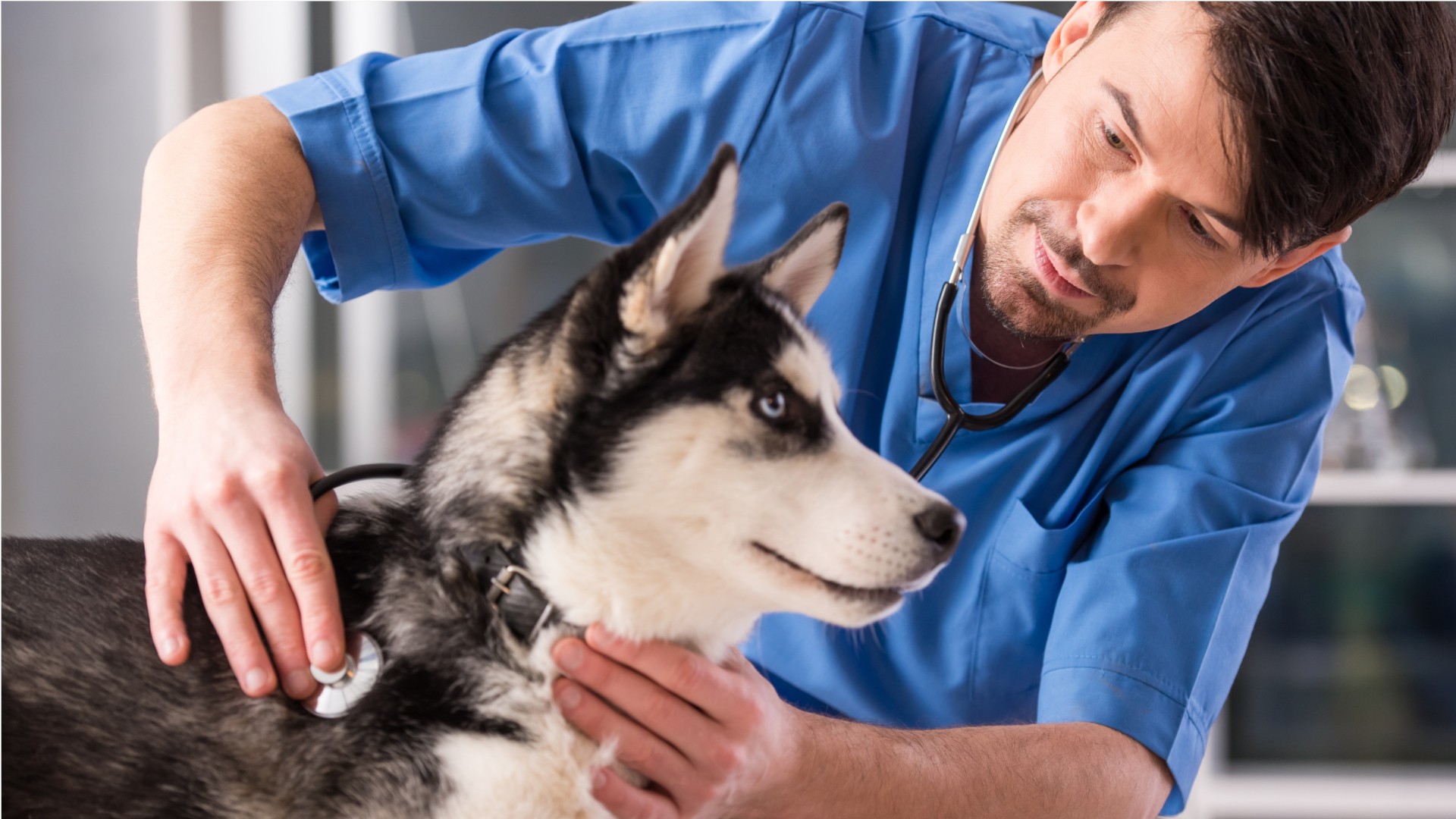
Diagnose, treat, or research diseases and injuries of animals. Includes veterinarians who conduct research and development, inspect livestock, or care for pets and companion animals.
Yearly Salary
| High: | $164K |
| Median: | $99K |
| Low: | $60K |
Demand

Core Tasks
- Treat sick or injured animals by prescribing medication, setting bones, dressing wounds, or performing surgery.
- Examine animals to detect and determine the nature of diseases or injuries.
- Inoculate animals against various diseases, such as rabies or distemper.
- Collect body tissue, feces, blood, urine, or other body fluids for examination and analysis.
- Operate diagnostic equipment, such as radiographic or ultrasound equipment, and interpret the resulting images.
- Educate the public about diseases that can be spread from animals to humans.
- Counsel clients about the deaths of their pets or about euthanasia decisions for their pets.
- Specialize in a particular type of treatment, such as dentistry, pathology, nutrition, surgery, microbiology, or internal medicine.
- Direct the overall operations of animal hospitals, clinics, or mobile services to farms.
- Advise animal owners regarding sanitary measures, feeding, general care, medical conditions, or treatment options.
- Euthanize animals.
- Attend lectures, conferences, or continuing education courses.
- Inspect and test horses, sheep, poultry, or other animals to detect the presence of communicable diseases.
- Train or supervise workers who handle or care for animals.
- Establish or conduct quarantine or testing procedures that prevent the spread of diseases to other animals or to humans and that comply with applicable government regulations.
- Research diseases to which animals could be susceptible.
- Provide care to a wide range of animals or specialize in a particular species, such as horses or exotic birds.
- Determine the effects of drug therapies, antibiotics, or new surgical techniques by testing them on animals.
- Perform administrative or business management tasks, such as scheduling appointments, accepting payments from clients, budgeting, or maintaining business records.
- Plan or execute animal nutrition or reproduction programs.
- Conduct postmortem studies and analyses to determine the causes of animals' deaths.
Technology Skills
Technology
Example
Hot Technology
Tools Used
Tool
Example
Top 10 Knowledge Required
Biology
94%
Knowledge of plant and animal organisms, their tissues, cells, functions, interdependencies, and interactions with each other and the environment.
Medicine and Dentistry
94%
Knowledge of the information and techniques needed to diagnose and treat human injuries, diseases, and deformities. This includes symptoms, treatment alternatives, drug properties and interactions, and preventive health-care measures.
Customer and Personal Service
90%
Knowledge of principles and processes for providing customer and personal services. This includes customer needs assessment, meeting quality standards for services, and evaluation of customer satisfaction.
English Language
87%
Knowledge of the structure and content of the English language including the meaning and spelling of words, and rules of composition and grammar.
Mathematics
75%
Knowledge of arithmetic, algebra, geometry, calculus, statistics, and their applications.
Education and Training
70%
Knowledge of principles and methods for curriculum and training design, teaching and instruction for individuals and groups, and the measurement of training effects.
Chemistry
68%
Knowledge of the chemical composition, structure, and properties of substances and of the chemical processes and transformations that they undergo. This includes uses of chemicals and their interactions, danger signs, production techniques, and disposal methods.
Administration and Management
67%
Knowledge of business and management principles involved in strategic planning, resource allocation, human resources modeling, leadership technique, production methods, and coordination of people and resources.
Personnel and Human Resources
67%
Knowledge of principles and procedures for personnel recruitment, selection, training, compensation and benefits, labor relations and negotiation, and personnel information systems.
Psychology
63%
Knowledge of human behavior and performance; individual differences in ability, personality, and interests; learning and motivation; psychological research methods; and the assessment and treatment of behavioral and affective disorders.
Top 10 Skills
Active Listening
83%
Giving full attention to what other people are saying, taking time to understand the points being made, asking questions as appropriate, and not interrupting at inappropriate times.
Reading Comprehension
83%
Understanding written sentences and paragraphs in work-related documents.
Active Learning
80%
Understanding the implications of new information for both current and future problem-solving and decision-making.
Complex Problem Solving
78%
Identifying complex problems and reviewing related information to develop and evaluate options and implement solutions.
Critical Thinking
78%
Using logic and reasoning to identify the strengths and weaknesses of alternative solutions, conclusions, or approaches to problems.
Judgment and Decision Making
78%
Considering the relative costs and benefits of potential actions to choose the most appropriate one.
Science
78%
Using scientific rules and methods to solve problems.
Speaking
78%
Talking to others to convey information effectively.
Writing
70%
Communicating effectively in writing as appropriate for the needs of the audience.
Service Orientation
68%
Actively looking for ways to help people.
Top 10 Abilities
Oral Comprehension
83%
The ability to listen to and understand information and ideas presented through spoken words and sentences.
Oral Expression
83%
The ability to communicate information and ideas in speaking so others will understand.
Written Comprehension
83%
The ability to read and understand information and ideas presented in writing.
Deductive Reasoning
80%
The ability to apply general rules to specific problems to produce answers that make sense.
Inductive Reasoning
80%
The ability to combine pieces of information to form general rules or conclusions (includes finding a relationship among seemingly unrelated events).
Near Vision
80%
The ability to see details at close range (within a few feet of the observer).
Problem Sensitivity
80%
The ability to tell when something is wrong or is likely to go wrong. It does not involve solving the problem, only recognizing that there is a problem.
Information Ordering
75%
The ability to arrange things or actions in a certain order or pattern according to a specific rule or set of rules (e.g., patterns of numbers, letters, words, pictures, mathematical operations).
Speech Clarity
73%
The ability to speak clearly so others can understand you.
Speech Recognition
73%
The ability to identify and understand the speech of another person.
Top 10 Work Activities
Making Decisions and Solving Problems
97%
Analyzing information and evaluating results to choose the best solution and solve problems.
Getting Information
91%
Observing, receiving, and otherwise obtaining information from all relevant sources.
Identifying Objects, Actions, and Events
90%
Identifying information by categorizing, estimating, recognizing differences or similarities, and detecting changes in circumstances or events.
Updating and Using Relevant Knowledge
90%
Keeping up-to-date technically and applying new knowledge to your job.
Documenting/Recording Information
86%
Entering, transcribing, recording, storing, or maintaining information in written or electronic/magnetic form.
Performing for or Working Directly with the Public
85%
Performing for people or dealing directly with the public. This includes serving customers in restaurants and stores, and receiving clients or guests.
Establishing and Maintaining Interpersonal Relationships
82%
Developing constructive and cooperative working relationships with others, and maintaining them over time.
Interpreting the Meaning of Information for Others
81%
Translating or explaining what information means and how it can be used.
Monitoring Processes, Materials, or Surroundings
77%
Monitoring and reviewing information from materials, events, or the environment, to detect or assess problems.
Communicating with Supervisors, Peers, or Subordinates
76%
Providing information to supervisors, co-workers, and subordinates by telephone, in written form, e-mail, or in person.
Detailed Work Activities
- Treat acute illnesses, infections, or injuries.
- Operate on patients to treat conditions.
- Prescribe medications.
- Immunize patients.
- Examine patients to assess general physical condition.
- Collect biological specimens from patients.
- Analyze test data or images to inform diagnosis or treatment.
- Operate diagnostic imaging equipment.
- Communicate health and wellness information to the public.
- Counsel family members of clients or patients.
- Provide health and wellness advice to patients, program participants, or caregivers.
- Treat animal injuries or illnesses.
- Maintain medical or professional knowledge.
- Train medical providers.
- Supervise medical support personnel.
- Schedule patient procedures or appointments.
- Maintain medical facility records.
- Perform clerical work in medical settings.
- Develop medical treatment plans.
- Analyze medical data to determine cause of death.
- Maintain professional knowledge or certifications.
- Manage healthcare operations.
- Determine protocols for medical procedures.
- Conduct research to increase knowledge about medical issues.
- Provide care for animals.
Education
Interests
Realistic
86%
Work involves designing, building, or repairing of equipment, materials, or structures, engaging in physical activity, or working outdoors. Realistic occupations are often associated with engineering, mechanics and electronics, construction, woodworking, transportation, machine operation, agriculture, animal services, physical or manual labor, athletics, or protective services.
Investigative
85%
Work involves studying and researching non-living objects, living organisms, disease or other forms of impairment, or human behavior. Investigative occupations are often associated with physical, life, medical, or social sciences, and can be found in the fields of humanities, mathematics/statistics, information technology, or health care service.
Conventional
51%
Work involves following procedures and regulations to organize information or data, typically in a business setting. Conventional occupations are often associated with office work, accounting, mathematics/statistics, information technology, finance, or human resources.
Social
49%
Work involves helping, teaching, advising, assisting, or providing service to others. Social occupations are often associated with social, health care, personal service, teaching/education, or religious activities.
Enterprising
25%
Work involves managing, negotiating, marketing, or selling, typically in a business setting, or leading or advising people in political and legal situations. Enterprising occupations are often associated with business initiatives, sales, marketing/advertising, finance, management/administration, professional advising, public speaking, politics, or law.
Artistic
15%
Work involves creating original visual artwork, performances, written works, food, or music for a variety of media, or applying artistic principles to the design of various objects and materials. Artistic occupations are often associated with visual arts, applied arts and design, performing arts, music, creative writing, media, or culinary art.
Work Values
Achievement
100%
Occupations that satisfy this work value are results oriented and allow employees to use their strongest abilities, giving them a feeling of accomplishment. Corresponding needs are Ability Utilization and Achievement.
Independence
91%
Occupations that satisfy this work value allow employees to work on their own and make decisions. Corresponding needs are Creativity, Responsibility and Autonomy.
Recognition
86%
Occupations that satisfy this work value offer advancement, potential for leadership, and are often considered prestigious. Corresponding needs are Advancement, Authority, Recognition and Social Status.
Relationships
86%
Occupations that satisfy this work value allow employees to provide service to others and work with co-workers in a friendly non-competitive environment. Corresponding needs are Co-workers, Moral Values and Social Service.
Working Conditions
84%
Occupations that satisfy this work value offer job security and good working conditions. Corresponding needs are Activity, Compensation, Independence, Security, Variety and Working Conditions.
Support
67%
Occupations that satisfy this work value offer supportive management that stands behind employees. Corresponding needs are Company Policies, Supervision: Human Relations and Supervision: Technical.
Majors
Colleges
SAGE Scholars Member Schools that offer majors leading to this career.
Check out the College Search to see the full list of schools with majors for this career.