Audiologists
Overview
SaveJob Zone Five: Extensive Preparation Needed
Experience
Extensive skill, knowledge, and experience are needed for these occupations. Many require more than five years of experience. For example, surgeons must complete four years of college and an additional five to seven years of specialized medical training to be able to do their job.
Education
Most of these occupations require graduate school. For example, they may require a master's degree, and some require a Ph.D., M.D., or J.D. (law degree).
Job Training
Employees may need some on-the-job training, but most of these occupations assume that the person will already have the required skills, knowledge, work-related experience, and/or training.
Examples
These occupations often involve coordinating, training, supervising, or managing the activities of others to accomplish goals. Very advanced communication and organizational skills are required. Examples include pharmacists, lawyers, astronomers, biologists, clergy, physician assistants, and veterinarians.
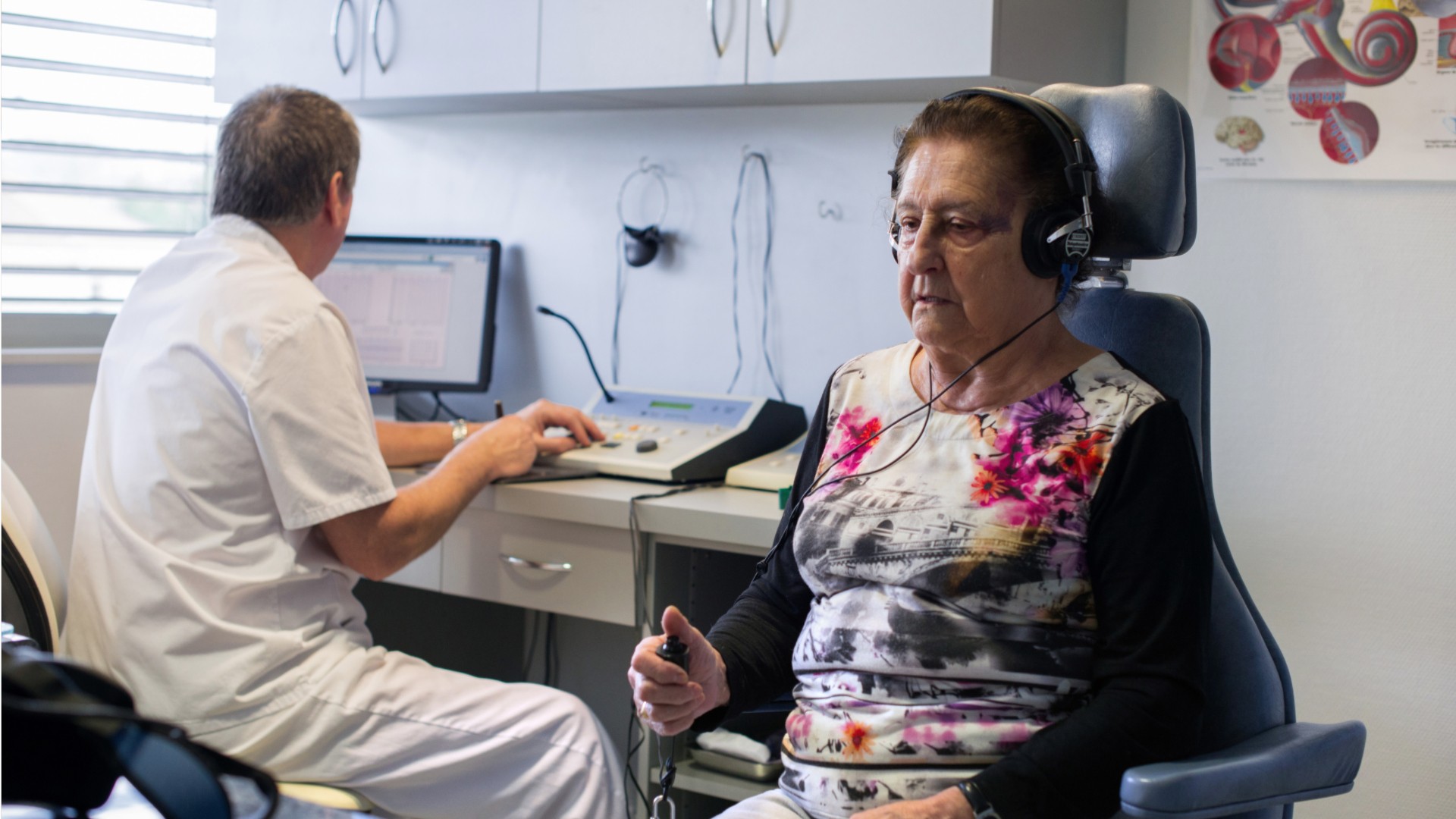
Assess and treat persons with hearing and related disorders. May fit hearing aids and provide auditory training. May perform research related to hearing problems.
Yearly Salary
| High: | $128K |
| Median: | $81K |
| Low: | $56K |
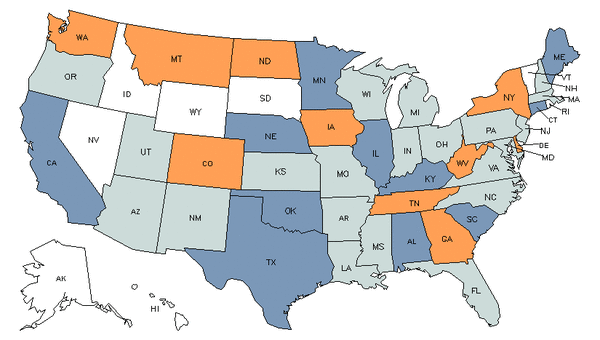
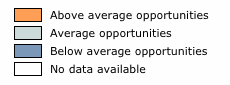
Demand
Core Tasks
- Maintain patient records at all stages, including initial and subsequent evaluation and treatment activities.
- Evaluate hearing and balance disorders to determine diagnoses and courses of treatment.
- Fit, dispense, and repair assistive devices, such as hearing aids.
- Administer hearing tests and examine patients to collect information on type and degree of impairment, using specialized instruments and electronic equipment.
- Monitor patients' progress and provide ongoing observation of hearing or balance status.
- Instruct patients, parents, teachers, or employers in communication strategies to maximize effective receptive communication.
- Counsel and instruct patients and their families in techniques to improve hearing and communication related to hearing loss.
- Participate in conferences or training to update or share knowledge of new hearing or balance disorder treatment methods or technologies.
- Refer patients to additional medical or educational services, if needed.
- Advise educators or other medical staff on hearing or balance topics.
- Examine and clean patients' ear canals.
- Program and monitor cochlear implants to fit the needs of patients.
- Recommend assistive devices according to patients' needs or nature of impairments.
- Educate and supervise audiology students and health care personnel.
- Plan and conduct treatment programs for patients' hearing or balance problems, consulting with educators, physicians, nurses, psychologists, speech-language pathologists, and other health care personnel, as necessary.
- Work with multidisciplinary teams to assess and rehabilitate recipients of implanted hearing devices through auditory training and counseling.
- Conduct or direct research on hearing or balance topics and report findings to help in the development of procedures, technology, or treatments.
- Perform administrative tasks, such as managing office functions and finances.
- Provide information to the public on hearing or balance topics.
- Engage in marketing activities, such as developing marketing plans, to promote business for private practices.
- Develop and supervise hearing screening programs.
- Measure noise levels in workplaces and conduct hearing conservation programs in industry, military, schools, and communities.
Technology Skills
Technology
Example
Hot Technology
Tools Used
Tool
Example
Top 10 Knowledge Required
Customer and Personal Service
97%
Knowledge of principles and processes for providing customer and personal services. This includes customer needs assessment, meeting quality standards for services, and evaluation of customer satisfaction.
Therapy and Counseling
92%
Knowledge of principles, methods, and procedures for diagnosis, treatment, and rehabilitation of physical and mental dysfunctions, and for career counseling and guidance.
Psychology
87%
Knowledge of human behavior and performance; individual differences in ability, personality, and interests; learning and motivation; psychological research methods; and the assessment and treatment of behavioral and affective disorders.
Medicine and Dentistry
86%
Knowledge of the information and techniques needed to diagnose and treat human injuries, diseases, and deformities. This includes symptoms, treatment alternatives, drug properties and interactions, and preventive health-care measures.
English Language
84%
Knowledge of the structure and content of the English language including the meaning and spelling of words, and rules of composition and grammar.
Computers and Electronics
82%
Knowledge of circuit boards, processors, chips, electronic equipment, and computer hardware and software, including applications and programming.
Sales and Marketing
82%
Knowledge of principles and methods for showing, promoting, and selling products or services. This includes marketing strategy and tactics, product demonstration, sales techniques, and sales control systems.
Biology
79%
Knowledge of plant and animal organisms, their tissues, cells, functions, interdependencies, and interactions with each other and the environment.
Education and Training
79%
Knowledge of principles and methods for curriculum and training design, teaching and instruction for individuals and groups, and the measurement of training effects.
Administrative
74%
Knowledge of administrative and office procedures and systems such as word processing, managing files and records, stenography and transcription, designing forms, and workplace terminology.
Top 10 Skills
Active Listening
83%
Giving full attention to what other people are saying, taking time to understand the points being made, asking questions as appropriate, and not interrupting at inappropriate times.
Reading Comprehension
83%
Understanding written sentences and paragraphs in work-related documents.
Active Learning
80%
Understanding the implications of new information for both current and future problem-solving and decision-making.
Critical Thinking
80%
Using logic and reasoning to identify the strengths and weaknesses of alternative solutions, conclusions, or approaches to problems.
Social Perceptiveness
80%
Being aware of others' reactions and understanding why they react as they do.
Speaking
80%
Talking to others to convey information effectively.
Writing
80%
Communicating effectively in writing as appropriate for the needs of the audience.
Judgment and Decision Making
75%
Considering the relative costs and benefits of potential actions to choose the most appropriate one.
Monitoring
75%
Monitoring/Assessing performance of yourself, other individuals, or organizations to make improvements or take corrective action.
Complex Problem Solving
73%
Identifying complex problems and reviewing related information to develop and evaluate options and implement solutions.
Top 10 Abilities
Oral Comprehension
83%
The ability to listen to and understand information and ideas presented through spoken words and sentences.
Written Comprehension
83%
The ability to read and understand information and ideas presented in writing.
Deductive Reasoning
80%
The ability to apply general rules to specific problems to produce answers that make sense.
Inductive Reasoning
80%
The ability to combine pieces of information to form general rules or conclusions (includes finding a relationship among seemingly unrelated events).
Oral Expression
80%
The ability to communicate information and ideas in speaking so others will understand.
Problem Sensitivity
80%
The ability to tell when something is wrong or is likely to go wrong. It does not involve solving the problem, only recognizing that there is a problem.
Written Expression
80%
The ability to communicate information and ideas in writing so others will understand.
Speech Clarity
78%
The ability to speak clearly so others can understand you.
Near Vision
75%
The ability to see details at close range (within a few feet of the observer).
Speech Recognition
75%
The ability to identify and understand the speech of another person.
Top 10 Work Activities
Assisting and Caring for Others
98%
Providing personal assistance, medical attention, emotional support, or other personal care to others such as coworkers, customers, or patients.
Updating and Using Relevant Knowledge
96%
Keeping up-to-date technically and applying new knowledge to your job.
Working with Computers
96%
Using computers and computer systems (including hardware and software) to program, write software, set up functions, enter data, or process information.
Establishing and Maintaining Interpersonal Relationships
95%
Developing constructive and cooperative working relationships with others, and maintaining them over time.
Performing for or Working Directly with the Public
95%
Performing for people or dealing directly with the public. This includes serving customers in restaurants and stores, and receiving clients or guests.
Getting Information
93%
Observing, receiving, and otherwise obtaining information from all relevant sources.
Documenting/Recording Information
92%
Entering, transcribing, recording, storing, or maintaining information in written or electronic/magnetic form.
Making Decisions and Solving Problems
92%
Analyzing information and evaluating results to choose the best solution and solve problems.
Interpreting the Meaning of Information for Others
88%
Translating or explaining what information means and how it can be used.
Communicating with People Outside the Organization
87%
Communicating with people outside the organization, representing the organization to customers, the public, government, and other external sources. This information can be exchanged in person, in writing, or by telephone or e-mail.
Detailed Work Activities
- Record patient medical histories.
- Analyze test data or images to inform diagnosis or treatment.
- Adjust prostheses or other assistive devices.
- Test patient hearing.
- Examine patients to assess general physical condition.
- Operate diagnostic or therapeutic medical instruments or equipment.
- Monitor patient progress or responses to treatments.
- Train patients, family members, or caregivers in techniques for managing disabilities or illnesses.
- Refer patients to other healthcare practitioners or health resources.
- Maintain medical or professional knowledge.
- Administer basic health care or medical treatments.
- Recommend types of assistive devices.
- Advise medical personnel regarding healthcare issues.
- Enter patient or treatment data into computers.
- Train medical providers.
- Supervise patient care personnel.
- Develop medical treatment plans.
- Collaborate with healthcare professionals to plan or provide treatment.
- Conduct research to increase knowledge about medical issues.
- Present medical research reports.
- Manage healthcare operations.
- Communicate health and wellness information to the public.
- Merchandise healthcare products or services.
- Inspect work environments to ensure safety.
- Conduct health or safety training programs.
- Develop health assessment methods or programs.
Education
Interests
Investigative
87%
Work involves studying and researching non-living objects, living organisms, disease or other forms of impairment, or human behavior. Investigative occupations are often associated with physical, life, medical, or social sciences, and can be found in the fields of humanities, mathematics/statistics, information technology, or health care service.
Social
83%
Work involves helping, teaching, advising, assisting, or providing service to others. Social occupations are often associated with social, health care, personal service, teaching/education, or religious activities.
Conventional
60%
Work involves following procedures and regulations to organize information or data, typically in a business setting. Conventional occupations are often associated with office work, accounting, mathematics/statistics, information technology, finance, or human resources.
Realistic
59%
Work involves designing, building, or repairing of equipment, materials, or structures, engaging in physical activity, or working outdoors. Realistic occupations are often associated with engineering, mechanics and electronics, construction, woodworking, transportation, machine operation, agriculture, animal services, physical or manual labor, athletics, or protective services.
Artistic
31%
Work involves creating original visual artwork, performances, written works, food, or music for a variety of media, or applying artistic principles to the design of various objects and materials. Artistic occupations are often associated with visual arts, applied arts and design, performing arts, music, creative writing, media, or culinary art.
Enterprising
23%
Work involves managing, negotiating, marketing, or selling, typically in a business setting, or leading or advising people in political and legal situations. Enterprising occupations are often associated with business initiatives, sales, marketing/advertising, finance, management/administration, professional advising, public speaking, politics, or law.
Work Values
Relationships
91%
Occupations that satisfy this work value allow employees to provide service to others and work with co-workers in a friendly non-competitive environment. Corresponding needs are Co-workers, Moral Values and Social Service.
Achievement
81%
Occupations that satisfy this work value are results oriented and allow employees to use their strongest abilities, giving them a feeling of accomplishment. Corresponding needs are Ability Utilization and Achievement.
Working Conditions
79%
Occupations that satisfy this work value offer job security and good working conditions. Corresponding needs are Activity, Compensation, Independence, Security, Variety and Working Conditions.
Independence
72%
Occupations that satisfy this work value allow employees to work on their own and make decisions. Corresponding needs are Creativity, Responsibility and Autonomy.
Recognition
72%
Occupations that satisfy this work value offer advancement, potential for leadership, and are often considered prestigious. Corresponding needs are Advancement, Authority, Recognition and Social Status.
Support
72%
Occupations that satisfy this work value offer supportive management that stands behind employees. Corresponding needs are Company Policies, Supervision: Human Relations and Supervision: Technical.