Medical Appliance Technicians
Overview
SaveJob Zone Three: Medium Preparation Needed
Experience
Previous work-related skill, knowledge, or experience is required for these occupations. For example, an electrician must have completed three or four years of apprenticeship or several years of vocational training, and often must have passed a licensing exam, in order to perform the job.
Education
Most occupations in this zone require training in vocational schools, related on-the-job experience, or an associate's degree.
Job Training
Employees in these occupations usually need one or two years of training involving both on-the-job experience and informal training with experienced workers. A recognized apprenticeship program may be associated with these occupations.
Examples
These occupations usually involve using communication and organizational skills to coordinate, supervise, manage, or train others to accomplish goals. Examples include hydroelectric production managers, desktop publishers, electricians, agricultural technicians, barbers, court reporters and simultaneous captioners, and medical assistants.
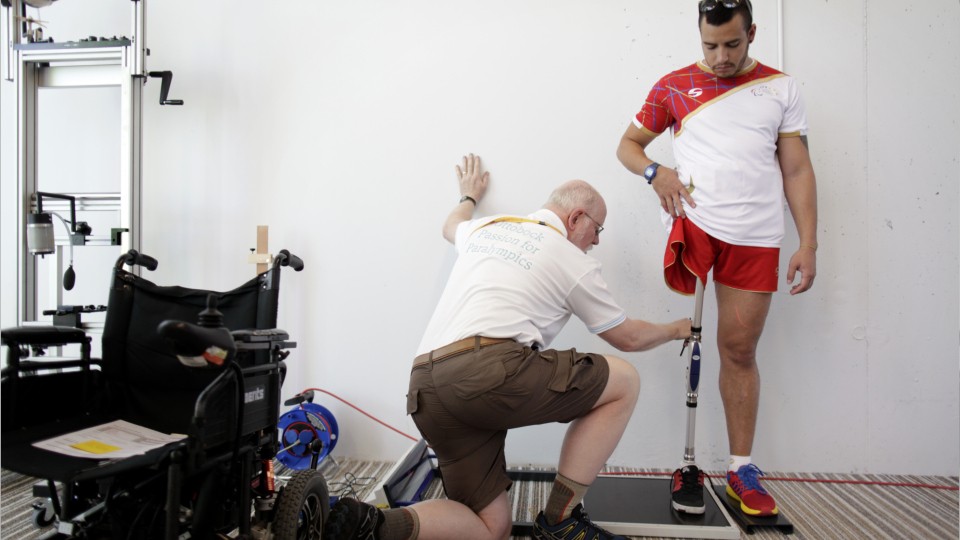
Construct, maintain, or repair medical supportive devices such as braces, orthotics and prosthetic devices, joints, arch supports, and other surgical and medical appliances.
Yearly Salary
| High: | $69K |
| Median: | $41K |
| Low: | $27K |
Demand
Core Tasks
- Drill and tap holes for rivets, and glue, weld, bolt, or rivet parts together to form prosthetic or orthotic devices.
- Make orthotic or prosthetic devices, using materials such as thermoplastic and thermosetting materials, metal alloys and leather, and hand or power tools.
- Read prescriptions or specifications to determine the type of product or device to be fabricated and the materials and tools required.
- Bend, form, and shape fabric or material to conform to prescribed contours of structural components.
- Construct or receive casts or impressions of patients' torsos or limbs for use as cutting and fabrication patterns.
- Repair, modify, or maintain medical supportive devices, such as artificial limbs, braces, or surgical supports, according to specifications.
- Cover or pad metal or plastic structures or devices, using coverings such as rubber, leather, felt, plastic, or fiberglass.
- Test medical supportive devices for proper alignment, movement, or biomechanical stability, using meters and alignment fixtures.
- Fit appliances onto patients, and make any necessary adjustments.
- Lay out and mark dimensions of parts, using templates and precision measuring instruments.
- Mix pigments to match patients' skin coloring, according to formulas, and apply mixtures to orthotic or prosthetic devices.
- Polish artificial limbs, braces, or supports, using grinding and buffing wheels.
- Take patients' body or limb measurements for use in device construction.
- Instruct patients in use of prosthetic or orthotic devices.
- Service or repair machinery used in the fabrication of appliances.
Technology Skills
Technology
Example
Hot Technology
Tools Used
Tool
Example
Top 10 Knowledge Required
Production and Processing
78%
Knowledge of raw materials, production processes, quality control, costs, and other techniques for maximizing the effective manufacture and distribution of goods.
Customer and Personal Service
74%
Knowledge of principles and processes for providing customer and personal services. This includes customer needs assessment, meeting quality standards for services, and evaluation of customer satisfaction.
English Language
70%
Knowledge of the structure and content of the English language including the meaning and spelling of words, and rules of composition and grammar.
Mechanical
69%
Knowledge of machines and tools, including their designs, uses, repair, and maintenance.
Design
66%
Knowledge of design techniques, tools, and principles involved in production of precision technical plans, blueprints, drawings, and models.
Education and Training
62%
Knowledge of principles and methods for curriculum and training design, teaching and instruction for individuals and groups, and the measurement of training effects.
Mathematics
60%
Knowledge of arithmetic, algebra, geometry, calculus, statistics, and their applications.
Administration and Management
59%
Knowledge of business and management principles involved in strategic planning, resource allocation, human resources modeling, leadership technique, production methods, and coordination of people and resources.
Administrative
58%
Knowledge of administrative and office procedures and systems such as word processing, managing files and records, stenography and transcription, designing forms, and workplace terminology.
Engineering and Technology
58%
Knowledge of the practical application of engineering science and technology. This includes applying principles, techniques, procedures, and equipment to the design and production of various goods and services.
Top 10 Skills
Active Listening
78%
Giving full attention to what other people are saying, taking time to understand the points being made, asking questions as appropriate, and not interrupting at inappropriate times.
Critical Thinking
75%
Using logic and reasoning to identify the strengths and weaknesses of alternative solutions, conclusions, or approaches to problems.
Quality Control Analysis
75%
Conducting tests and inspections of products, services, or processes to evaluate quality or performance.
Reading Comprehension
73%
Understanding written sentences and paragraphs in work-related documents.
Speaking
73%
Talking to others to convey information effectively.
Troubleshooting
73%
Determining causes of operating errors and deciding what to do about it.
Operations Monitoring
70%
Watching gauges, dials, or other indicators to make sure a machine is working properly.
Social Perceptiveness
70%
Being aware of others' reactions and understanding why they react as they do.
Complex Problem Solving
68%
Identifying complex problems and reviewing related information to develop and evaluate options and implement solutions.
Judgment and Decision Making
65%
Considering the relative costs and benefits of potential actions to choose the most appropriate one.
Top 10 Abilities
Near Vision
78%
The ability to see details at close range (within a few feet of the observer).
Oral Comprehension
78%
The ability to listen to and understand information and ideas presented through spoken words and sentences.
Problem Sensitivity
78%
The ability to tell when something is wrong or is likely to go wrong. It does not involve solving the problem, only recognizing that there is a problem.
Arm-Hand Steadiness
75%
The ability to keep your hand and arm steady while moving your arm or while holding your arm and hand in one position.
Deductive Reasoning
75%
The ability to apply general rules to specific problems to produce answers that make sense.
Oral Expression
75%
The ability to communicate information and ideas in speaking so others will understand.
Visualization
75%
The ability to imagine how something will look after it is moved around or when its parts are moved or rearranged.
Finger Dexterity
73%
The ability to make precisely coordinated movements of the fingers of one or both hands to grasp, manipulate, or assemble very small objects.
Information Ordering
73%
The ability to arrange things or actions in a certain order or pattern according to a specific rule or set of rules (e.g., patterns of numbers, letters, words, pictures, mathematical operations).
Inductive Reasoning
70%
The ability to combine pieces of information to form general rules or conclusions (includes finding a relationship among seemingly unrelated events).
Top 10 Work Activities
Getting Information
81%
Observing, receiving, and otherwise obtaining information from all relevant sources.
Inspecting Equipment, Structures, or Materials
78%
Inspecting equipment, structures, or materials to identify the cause of errors or other problems or defects.
Making Decisions and Solving Problems
78%
Analyzing information and evaluating results to choose the best solution and solve problems.
Communicating with Supervisors, Peers, or Subordinates
74%
Providing information to supervisors, co-workers, and subordinates by telephone, in written form, e-mail, or in person.
Organizing, Planning, and Prioritizing Work
74%
Developing specific goals and plans to prioritize, organize, and accomplish your work.
Identifying Objects, Actions, and Events
73%
Identifying information by categorizing, estimating, recognizing differences or similarities, and detecting changes in circumstances or events.
Monitoring Processes, Materials, or Surroundings
73%
Monitoring and reviewing information from materials, events, or the environment, to detect or assess problems.
Estimating the Quantifiable Characteristics of Products, Events, or Information
72%
Estimating sizes, distances, and quantities; or determining time, costs, resources, or materials needed to perform a work activity.
Thinking Creatively
72%
Developing, designing, or creating new applications, ideas, relationships, systems, or products, including artistic contributions.
Controlling Machines and Processes
69%
Using either control mechanisms or direct physical activity to operate machines or processes (not including computers or vehicles).
Detailed Work Activities
- Drill holes in parts, equipment, or materials.
- Operate welding equipment.
- Read work orders or other instructions to determine product specifications or materials requirements.
- Construct customized assistive medical or dental devices.
- Adjust fabrics or other materials during garment production.
- Cast molds of patient anatomies to create medical or dental devices.
- Repair medical or dental assistive devices.
- Inspect medical or dental assistive devices.
- Draw guide lines or markings on materials or workpieces using patterns or other references.
- Measure clients to ensure proper product fit.
- Polish materials, workpieces, or finished products.
- Operate grinding equipment.
- Instruct patients in the use of assistive equipment.
- Repair production equipment or tools.
- Mix ingredients to create specific finishes.
- Apply protective or decorative finishes to workpieces or products.
Education
Interests
Realistic
100%
Work involves designing, building, or repairing of equipment, materials, or structures, engaging in physical activity, or working outdoors. Realistic occupations are often associated with engineering, mechanics and electronics, construction, woodworking, transportation, machine operation, agriculture, animal services, physical or manual labor, athletics, or protective services.
Investigative
58%
Work involves studying and researching non-living objects, living organisms, disease or other forms of impairment, or human behavior. Investigative occupations are often associated with physical, life, medical, or social sciences, and can be found in the fields of humanities, mathematics/statistics, information technology, or health care service.
Conventional
53%
Work involves following procedures and regulations to organize information or data, typically in a business setting. Conventional occupations are often associated with office work, accounting, mathematics/statistics, information technology, finance, or human resources.
Social
45%
Work involves helping, teaching, advising, assisting, or providing service to others. Social occupations are often associated with social, health care, personal service, teaching/education, or religious activities.
Artistic
23%
Work involves creating original visual artwork, performances, written works, food, or music for a variety of media, or applying artistic principles to the design of various objects and materials. Artistic occupations are often associated with visual arts, applied arts and design, performing arts, music, creative writing, media, or culinary art.
Enterprising
15%
Work involves managing, negotiating, marketing, or selling, typically in a business setting, or leading or advising people in political and legal situations. Enterprising occupations are often associated with business initiatives, sales, marketing/advertising, finance, management/administration, professional advising, public speaking, politics, or law.
Work Values
Relationships
81%
Occupations that satisfy this work value allow employees to provide service to others and work with co-workers in a friendly non-competitive environment. Corresponding needs are Co-workers, Moral Values and Social Service.
Support
77%
Occupations that satisfy this work value offer supportive management that stands behind employees. Corresponding needs are Company Policies, Supervision: Human Relations and Supervision: Technical.
Working Conditions
69%
Occupations that satisfy this work value offer job security and good working conditions. Corresponding needs are Activity, Compensation, Independence, Security, Variety and Working Conditions.
Achievement
67%
Occupations that satisfy this work value are results oriented and allow employees to use their strongest abilities, giving them a feeling of accomplishment. Corresponding needs are Ability Utilization and Achievement.
Independence
67%
Occupations that satisfy this work value allow employees to work on their own and make decisions. Corresponding needs are Creativity, Responsibility and Autonomy.
Recognition
53%
Occupations that satisfy this work value offer advancement, potential for leadership, and are often considered prestigious. Corresponding needs are Advancement, Authority, Recognition and Social Status.
Colleges
SAGE Scholars Member Schools that offer majors leading to this career.
Check out the College Search to see the full list of schools with majors for this career.