Hydroelectric Production Managers
Overview
SaveJob Zone Three: Medium Preparation Needed
Experience
Previous work-related skill, knowledge, or experience is required for these occupations. For example, an electrician must have completed three or four years of apprenticeship or several years of vocational training, and often must have passed a licensing exam, in order to perform the job.
Education
Most occupations in this zone require training in vocational schools, related on-the-job experience, or an associate's degree.
Job Training
Employees in these occupations usually need one or two years of training involving both on-the-job experience and informal training with experienced workers. A recognized apprenticeship program may be associated with these occupations.
Examples
These occupations usually involve using communication and organizational skills to coordinate, supervise, manage, or train others to accomplish goals. Examples include hydroelectric production managers, desktop publishers, electricians, agricultural technicians, barbers, court reporters and simultaneous captioners, and medical assistants.
Manage operations at hydroelectric power generation facilities. Maintain and monitor hydroelectric plant equipment for efficient and safe plant operations.

Yearly Salary
| High: | $181K |
| Median: | $108K |
| Low: | $67K |
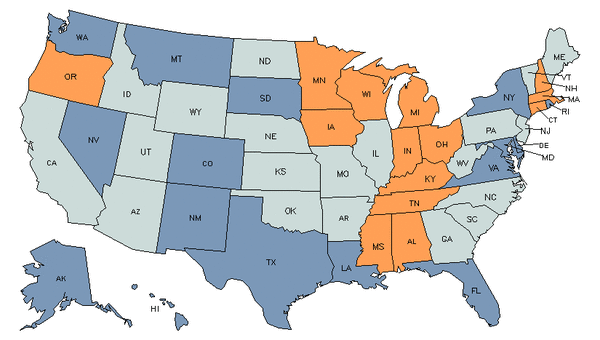
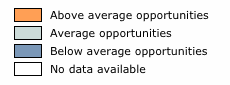
Demand
Core Tasks
- Direct operations, maintenance, or repair of hydroelectric power facilities.
- Identify and communicate power system emergencies.
- Maintain records of hydroelectric facility operations, maintenance, or repairs.
- Inspect hydroelectric facilities, including switchyards, control houses, or relay houses, for normal operation or adherence to safety standards.
- Monitor or inspect hydroelectric equipment, such as hydro-turbines, generators, or control systems.
- Perform or direct preventive or corrective containment or cleanup to protect the environment.
- Supervise or monitor hydroelectric facility operations to ensure that generation or mechanical equipment conform to applicable regulations or standards.
- Check hydroelectric operations for compliance with prescribed operating limits, such as loads, voltages, temperatures, lines, or equipment.
- Operate energized high- or low-voltage hydroelectric power transmission system substations, according to procedures and safety requirements.
- Plan or coordinate hydroelectric production operations to meet customer requirements.
- Develop or implement projects to improve efficiency, economy, or effectiveness of hydroelectric plant operations.
- Provide technical direction in the erection or commissioning of hydroelectric equipment or supporting electrical or mechanical systems.
- Supervise hydropower plant equipment installations, upgrades, or maintenance.
- Plan or manage hydroelectric plant upgrades.
- Create or enforce hydrostation voltage schedules.
- Develop or review budgets, annual plans, power contracts, power rates, standing operating procedures, power reviews, or engineering studies.
- Respond to problems related to ratepayers, water users, power users, government agencies, educational institutions, or other private or public power resource interests.
- Develop or implement policy evaluation procedures for hydroelectric generation activities.
Technology Skills
Technology
Example
Hot Technology
Tools Used
Tool
Example
Top 10 Knowledge Required
Mechanical
82%
Knowledge of machines and tools, including their designs, uses, repair, and maintenance.
Public Safety and Security
82%
Knowledge of relevant equipment, policies, procedures, and strategies to promote effective local, state, or national security operations for the protection of people, data, property, and institutions.
Administration and Management
79%
Knowledge of business and management principles involved in strategic planning, resource allocation, human resources modeling, leadership technique, production methods, and coordination of people and resources.
English Language
77%
Knowledge of the structure and content of the English language including the meaning and spelling of words, and rules of composition and grammar.
Engineering and Technology
73%
Knowledge of the practical application of engineering science and technology. This includes applying principles, techniques, procedures, and equipment to the design and production of various goods and services.
Computers and Electronics
72%
Knowledge of circuit boards, processors, chips, electronic equipment, and computer hardware and software, including applications and programming.
Personnel and Human Resources
72%
Knowledge of principles and procedures for personnel recruitment, selection, training, compensation and benefits, labor relations and negotiation, and personnel information systems.
Education and Training
71%
Knowledge of principles and methods for curriculum and training design, teaching and instruction for individuals and groups, and the measurement of training effects.
Mathematics
69%
Knowledge of arithmetic, algebra, geometry, calculus, statistics, and their applications.
Law and Government
66%
Knowledge of laws, legal codes, court procedures, precedents, government regulations, executive orders, agency rules, and the democratic political process.
Top 10 Skills
Active Listening
83%
Giving full attention to what other people are saying, taking time to understand the points being made, asking questions as appropriate, and not interrupting at inappropriate times.
Speaking
83%
Talking to others to convey information effectively.
Judgment and Decision Making
78%
Considering the relative costs and benefits of potential actions to choose the most appropriate one.
Monitoring
78%
Monitoring/Assessing performance of yourself, other individuals, or organizations to make improvements or take corrective action.
Reading Comprehension
78%
Understanding written sentences and paragraphs in work-related documents.
Critical Thinking
75%
Using logic and reasoning to identify the strengths and weaknesses of alternative solutions, conclusions, or approaches to problems.
Management of Personnel Resources
75%
Motivating, developing, and directing people as they work, identifying the best people for the job.
Time Management
75%
Managing one's own time and the time of others.
Active Learning
73%
Understanding the implications of new information for both current and future problem-solving and decision-making.
Complex Problem Solving
73%
Identifying complex problems and reviewing related information to develop and evaluate options and implement solutions.
Top 10 Abilities
Oral Comprehension
83%
The ability to listen to and understand information and ideas presented through spoken words and sentences.
Oral Expression
83%
The ability to communicate information and ideas in speaking so others will understand.
Written Comprehension
83%
The ability to read and understand information and ideas presented in writing.
Deductive Reasoning
78%
The ability to apply general rules to specific problems to produce answers that make sense.
Problem Sensitivity
78%
The ability to tell when something is wrong or is likely to go wrong. It does not involve solving the problem, only recognizing that there is a problem.
Inductive Reasoning
75%
The ability to combine pieces of information to form general rules or conclusions (includes finding a relationship among seemingly unrelated events).
Perceptual Speed
73%
The ability to quickly and accurately compare similarities and differences among sets of letters, numbers, objects, pictures, or patterns. The things to be compared may be presented at the same time or one after the other. This ability also includes comparing a presented object with a remembered object.
Speech Clarity
73%
The ability to speak clearly so others can understand you.
Speech Recognition
73%
The ability to identify and understand the speech of another person.
Written Expression
73%
The ability to communicate information and ideas in writing so others will understand.
Top 10 Work Activities
Communicating with Supervisors, Peers, or Subordinates
88%
Providing information to supervisors, co-workers, and subordinates by telephone, in written form, e-mail, or in person.
Making Decisions and Solving Problems
86%
Analyzing information and evaluating results to choose the best solution and solve problems.
Inspecting Equipment, Structures, or Materials
85%
Inspecting equipment, structures, or materials to identify the cause of errors or other problems or defects.
Documenting/Recording Information
83%
Entering, transcribing, recording, storing, or maintaining information in written or electronic/magnetic form.
Getting Information
83%
Observing, receiving, and otherwise obtaining information from all relevant sources.
Organizing, Planning, and Prioritizing Work
83%
Developing specific goals and plans to prioritize, organize, and accomplish your work.
Coordinating the Work and Activities of Others
82%
Getting members of a group to work together to accomplish tasks.
Monitoring Processes, Materials, or Surroundings
82%
Monitoring and reviewing information from materials, events, or the environment, to detect or assess problems.
Identifying Objects, Actions, and Events
81%
Identifying information by categorizing, estimating, recognizing differences or similarities, and detecting changes in circumstances or events.
Scheduling Work and Activities
81%
Scheduling events, programs, and activities, as well as the work of others.
Detailed Work Activities
- Direct maintenance and repair activities in green energy production facilities.
- Communicate green energy production information.
- Maintain operational records for green energy processes or other environmentally-sustainable activities.
- Manage environmental sustainability projects.
- Inspect operations of green energy facilities.
- Evaluate green operations or programs for compliance with standards or regulations.
- Direct green energy production operations.
- Develop operating strategies, plans, or procedures for green or sustainable operations.
- Implement organizational process or policy changes.
- Develop sustainable organizational policies or practices.
- Advise others on green energy or related technologies.
- Resolve customer complaints or problems.
- Prepare operational budgets for green energy or other green operations.
- Develop procedures to evaluate organizational activities.
- Operate green energy production equipment.
- Schedule activities or facility use.
Education
Interests
Realistic
77%
Work involves designing, building, or repairing of equipment, materials, or structures, engaging in physical activity, or working outdoors. Realistic occupations are often associated with engineering, mechanics and electronics, construction, woodworking, transportation, machine operation, agriculture, animal services, physical or manual labor, athletics, or protective services.
Conventional
72%
Work involves following procedures and regulations to organize information or data, typically in a business setting. Conventional occupations are often associated with office work, accounting, mathematics/statistics, information technology, finance, or human resources.
Enterprising
66%
Work involves managing, negotiating, marketing, or selling, typically in a business setting, or leading or advising people in political and legal situations. Enterprising occupations are often associated with business initiatives, sales, marketing/advertising, finance, management/administration, professional advising, public speaking, politics, or law.
Investigative
52%
Work involves studying and researching non-living objects, living organisms, disease or other forms of impairment, or human behavior. Investigative occupations are often associated with physical, life, medical, or social sciences, and can be found in the fields of humanities, mathematics/statistics, information technology, or health care service.
Social
27%
Work involves helping, teaching, advising, assisting, or providing service to others. Social occupations are often associated with social, health care, personal service, teaching/education, or religious activities.
Artistic
15%
Work involves creating original visual artwork, performances, written works, food, or music for a variety of media, or applying artistic principles to the design of various objects and materials. Artistic occupations are often associated with visual arts, applied arts and design, performing arts, music, creative writing, media, or culinary art.
Work Values
Achievement
86%
Occupations that satisfy this work value are results oriented and allow employees to use their strongest abilities, giving them a feeling of accomplishment. Corresponding needs are Ability Utilization and Achievement.
Working Conditions
86%
Occupations that satisfy this work value offer job security and good working conditions. Corresponding needs are Activity, Compensation, Independence, Security, Variety and Working Conditions.
Independence
81%
Occupations that satisfy this work value allow employees to work on their own and make decisions. Corresponding needs are Creativity, Responsibility and Autonomy.
Recognition
81%
Occupations that satisfy this work value offer advancement, potential for leadership, and are often considered prestigious. Corresponding needs are Advancement, Authority, Recognition and Social Status.
Relationships
67%
Occupations that satisfy this work value allow employees to provide service to others and work with co-workers in a friendly non-competitive environment. Corresponding needs are Co-workers, Moral Values and Social Service.
Support
58%
Occupations that satisfy this work value offer supportive management that stands behind employees. Corresponding needs are Company Policies, Supervision: Human Relations and Supervision: Technical.
Colleges
SAGE Scholars Member Schools that offer majors leading to this career.
Check out the College Search to see the full list of schools with majors for this career.