Mining and Geological Engineers, Including Mining Safety Engineers
Overview
SaveJob Zone Four: Considerable Preparation Needed
Experience
A considerable amount of work-related skill, knowledge, or experience is needed for these occupations. For example, an accountant must complete four years of college and work for several years in accounting to be considered qualified.
Education
Most of these occupations require a four-year bachelor's degree, but some do not.
Job Training
Employees in these occupations usually need several years of work-related experience, on-the-job training, and/or vocational training.
Examples
Many of these occupations involve coordinating, supervising, managing, or training others. Examples include real estate brokers, sales managers, database administrators, graphic designers, conservation scientists, art directors, and cost estimators.
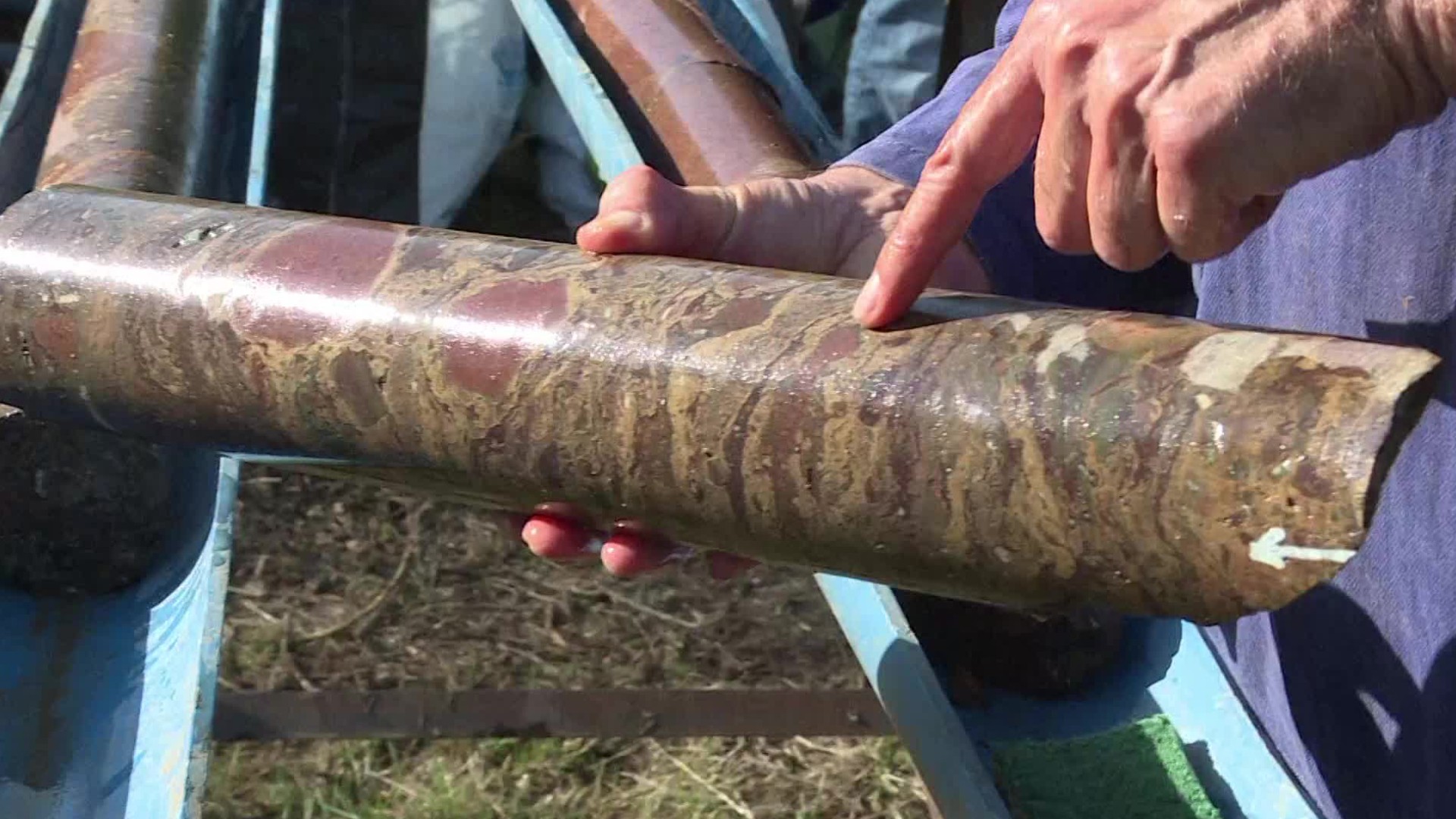
Conduct subsurface surveys to identify the characteristics of potential land or mining development sites. May specify the ground support systems, processes, and equipment for safe, economical, and environmentally sound extraction or underground construction activities. May inspect areas for unsafe geological conditions, equipment, and working conditions. May design, implement, and coordinate mine safety programs.
Yearly Salary
| High: | $156K |
| Median: | $93K |
| Low: | $57K |
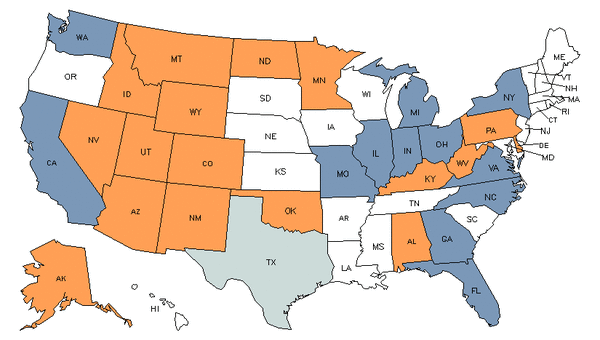
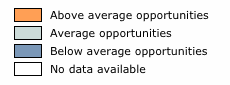
Demand
Core Tasks
- Prepare technical reports for use by mining, engineering, and management personnel.
- Inspect mining areas for unsafe structures, equipment, and working conditions.
- Test air to detect toxic gases and recommend measures to remove them, such as installation of ventilation shafts.
- Select or develop mineral location, extraction, and production methods, based on factors such as safety, cost, and deposit characteristics.
- Select locations and plan underground or surface mining operations, specifying processes, labor usage, and equipment that will result in safe, economical, and environmentally sound extraction of minerals and ores.
- Devise solutions to problems of land reclamation and water and air pollution, such as methods of storing excavated soil and returning exhausted mine sites to natural states.
- Implement and coordinate mine safety programs, including the design and maintenance of protective and rescue equipment and safety devices.
- Lay out, direct, and supervise mine construction operations, such as the construction of shafts and tunnels.
- Monitor mine production rates to assess operational effectiveness.
- Prepare schedules, reports, and estimates of the costs involved in developing and operating mines.
- Supervise, train, and evaluate technicians, technologists, survey personnel, engineers, scientists or other mine personnel.
- Examine maps, deposits, drilling locations, or mines to determine the location, size, accessibility, contents, value, and potential profitability of mineral, oil, and gas deposits.
- Design, develop, and implement computer applications for use in mining operations such as mine design, modeling, or mapping or for monitoring mine conditions.
- Design, implement, and monitor the development of mines, facilities, systems, or equipment.
- Select or devise materials-handling methods and equipment to transport ore, waste materials, and mineral products efficiently and economically.
- Evaluate data to develop new mining products, equipment, or processes.
- Design mining and mineral treatment equipment and machinery in collaboration with other engineering specialists.
- Conduct or direct mining experiments to test or prove research findings.
Technology Skills
Technology
Example
Hot Technology
Tools Used
Tool
Example
Top 10 Knowledge Required
Engineering and Technology
90%
Knowledge of the practical application of engineering science and technology. This includes applying principles, techniques, procedures, and equipment to the design and production of various goods and services.
Mathematics
89%
Knowledge of arithmetic, algebra, geometry, calculus, statistics, and their applications.
Design
72%
Knowledge of design techniques, tools, and principles involved in production of precision technical plans, blueprints, drawings, and models.
English Language
72%
Knowledge of the structure and content of the English language including the meaning and spelling of words, and rules of composition and grammar.
Production and Processing
72%
Knowledge of raw materials, production processes, quality control, costs, and other techniques for maximizing the effective manufacture and distribution of goods.
Administration and Management
68%
Knowledge of business and management principles involved in strategic planning, resource allocation, human resources modeling, leadership technique, production methods, and coordination of people and resources.
Administrative
66%
Knowledge of administrative and office procedures and systems such as word processing, managing files and records, stenography and transcription, designing forms, and workplace terminology.
Physics
65%
Knowledge and prediction of physical principles, laws, their interrelationships, and applications to understanding fluid, material, and atmospheric dynamics, and mechanical, electrical, atomic and sub-atomic structures and processes.
Economics and Accounting
64%
Knowledge of economic and accounting principles and practices, the financial markets, banking, and the analysis and reporting of financial data.
Computers and Electronics
63%
Knowledge of circuit boards, processors, chips, electronic equipment, and computer hardware and software, including applications and programming.
Top 10 Skills
Complex Problem Solving
83%
Identifying complex problems and reviewing related information to develop and evaluate options and implement solutions.
Critical Thinking
80%
Using logic and reasoning to identify the strengths and weaknesses of alternative solutions, conclusions, or approaches to problems.
Judgment and Decision Making
80%
Considering the relative costs and benefits of potential actions to choose the most appropriate one.
Reading Comprehension
80%
Understanding written sentences and paragraphs in work-related documents.
Speaking
80%
Talking to others to convey information effectively.
Writing
80%
Communicating effectively in writing as appropriate for the needs of the audience.
Active Listening
78%
Giving full attention to what other people are saying, taking time to understand the points being made, asking questions as appropriate, and not interrupting at inappropriate times.
Mathematics
75%
Using mathematics to solve problems.
Monitoring
75%
Monitoring/Assessing performance of yourself, other individuals, or organizations to make improvements or take corrective action.
Systems Analysis
75%
Determining how a system should work and how changes in conditions, operations, and the environment will affect outcomes.
Top 10 Abilities
Category Flexibility
80%
The ability to generate or use different sets of rules for combining or grouping things in different ways.
Deductive Reasoning
80%
The ability to apply general rules to specific problems to produce answers that make sense.
Inductive Reasoning
80%
The ability to combine pieces of information to form general rules or conclusions (includes finding a relationship among seemingly unrelated events).
Information Ordering
80%
The ability to arrange things or actions in a certain order or pattern according to a specific rule or set of rules (e.g., patterns of numbers, letters, words, pictures, mathematical operations).
Oral Comprehension
80%
The ability to listen to and understand information and ideas presented through spoken words and sentences.
Oral Expression
80%
The ability to communicate information and ideas in speaking so others will understand.
Problem Sensitivity
80%
The ability to tell when something is wrong or is likely to go wrong. It does not involve solving the problem, only recognizing that there is a problem.
Written Comprehension
80%
The ability to read and understand information and ideas presented in writing.
Written Expression
80%
The ability to communicate information and ideas in writing so others will understand.
Mathematical Reasoning
78%
The ability to choose the right mathematical methods or formulas to solve a problem.
Top 10 Work Activities
Making Decisions and Solving Problems
95%
Analyzing information and evaluating results to choose the best solution and solve problems.
Working with Computers
95%
Using computers and computer systems (including hardware and software) to program, write software, set up functions, enter data, or process information.
Communicating with Supervisors, Peers, or Subordinates
90%
Providing information to supervisors, co-workers, and subordinates by telephone, in written form, e-mail, or in person.
Getting Information
88%
Observing, receiving, and otherwise obtaining information from all relevant sources.
Analyzing Data or Information
86%
Identifying the underlying principles, reasons, or facts of information by breaking down information or data into separate parts.
Evaluating Information to Determine Compliance with Standards
86%
Using relevant information and individual judgment to determine whether events or processes comply with laws, regulations, or standards.
Processing Information
86%
Compiling, coding, categorizing, calculating, tabulating, auditing, or verifying information or data.
Identifying Objects, Actions, and Events
84%
Identifying information by categorizing, estimating, recognizing differences or similarities, and detecting changes in circumstances or events.
Documenting/Recording Information
83%
Entering, transcribing, recording, storing, or maintaining information in written or electronic/magnetic form.
Interpreting the Meaning of Information for Others
82%
Translating or explaining what information means and how it can be used.
Detailed Work Activities
- Prepare technical reports for internal use.
- Inspect facilities or sites to determine if they meet specifications or standards.
- Determine operational methods.
- Select tools, equipment, or technologies for use in operations or projects.
- Prepare detailed work plans.
- Estimate operational costs.
- Schedule operational activities.
- Prepare operational reports.
- Monitor the productivity or efficiency of industrial operations.
- Train personnel on proper operational procedures.
- Supervise engineering or other technical personnel.
- Review technical documents to plan work.
- Design structures or facilities.
- Design industrial equipment.
- Investigate safety of work environment.
- Advise others on health and safety issues.
- Coordinate safety or regulatory compliance activities.
- Resolve operational performance problems.
- Direct construction activities.
- Develop software or computer applications.
- Develop technical methods or processes.
- Analyze design or requirements information for mechanical equipment or systems.
- Research industrial processes or operations.
- Research topics in area of expertise.
- Conduct research to inform art, designs, or other work.
Education
Interests
Realistic
87%
Work involves designing, building, or repairing of equipment, materials, or structures, engaging in physical activity, or working outdoors. Realistic occupations are often associated with engineering, mechanics and electronics, construction, woodworking, transportation, machine operation, agriculture, animal services, physical or manual labor, athletics, or protective services.
Investigative
80%
Work involves studying and researching non-living objects, living organisms, disease or other forms of impairment, or human behavior. Investigative occupations are often associated with physical, life, medical, or social sciences, and can be found in the fields of humanities, mathematics/statistics, information technology, or health care service.
Conventional
67%
Work involves following procedures and regulations to organize information or data, typically in a business setting. Conventional occupations are often associated with office work, accounting, mathematics/statistics, information technology, finance, or human resources.
Enterprising
40%
Work involves managing, negotiating, marketing, or selling, typically in a business setting, or leading or advising people in political and legal situations. Enterprising occupations are often associated with business initiatives, sales, marketing/advertising, finance, management/administration, professional advising, public speaking, politics, or law.
Social
27%
Work involves helping, teaching, advising, assisting, or providing service to others. Social occupations are often associated with social, health care, personal service, teaching/education, or religious activities.
Artistic
22%
Work involves creating original visual artwork, performances, written works, food, or music for a variety of media, or applying artistic principles to the design of various objects and materials. Artistic occupations are often associated with visual arts, applied arts and design, performing arts, music, creative writing, media, or culinary art.
Work Values
Working Conditions
84%
Occupations that satisfy this work value offer job security and good working conditions. Corresponding needs are Activity, Compensation, Independence, Security, Variety and Working Conditions.
Support
81%
Occupations that satisfy this work value offer supportive management that stands behind employees. Corresponding needs are Company Policies, Supervision: Human Relations and Supervision: Technical.
Independence
77%
Occupations that satisfy this work value allow employees to work on their own and make decisions. Corresponding needs are Creativity, Responsibility and Autonomy.
Achievement
72%
Occupations that satisfy this work value are results oriented and allow employees to use their strongest abilities, giving them a feeling of accomplishment. Corresponding needs are Ability Utilization and Achievement.
Recognition
72%
Occupations that satisfy this work value offer advancement, potential for leadership, and are often considered prestigious. Corresponding needs are Advancement, Authority, Recognition and Social Status.
Relationships
53%
Occupations that satisfy this work value allow employees to provide service to others and work with co-workers in a friendly non-competitive environment. Corresponding needs are Co-workers, Moral Values and Social Service.
Colleges
SAGE Scholars Member Schools that offer majors leading to this career.
Check out the College Search to see the full list of schools with majors for this career.