Manicurists and Pedicurists
Overview
SaveJob Zone Two: Some Preparation Needed
Experience
Some previous work-related skill, knowledge, or experience is usually needed. For example, a teller would benefit from experience working directly with the public.
Education
These occupations usually require a high school diploma.
Job Training
Employees in these occupations need anywhere from a few months to one year of working with experienced employees. A recognized apprenticeship program may be associated with these occupations.
Examples
These occupations often involve using your knowledge and skills to help others. Examples include orderlies, counter and rental clerks, customer service representatives, security guards, upholsterers, tellers, and dental laboratory technicians.
Clean and shape customers' fingernails and toenails. May polish or decorate nails.

Yearly Salary
| High: | $38K |
| Median: | $27K |
| Low: | $20K |
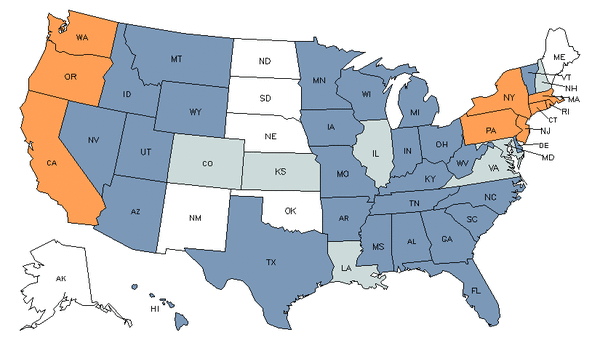
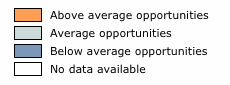
Demand
Core Tasks
- Clean and sanitize tools and work environment.
- Apply undercoat and clear or colored polish onto nails with brush.
- Maintain supply inventories and records of client services.
- Shape and smooth ends of nails, using scissors, files, or emery boards.
- Prepare nail cuticles with water and oil, using cuticle knives to push back cuticles and scissors or nippers to trim cuticles.
- Prepare customers' nails in soapy water, using swabs, files, and orange sticks.
- Remove previously applied nail polish, using liquid remover and swabs.
- Use rotary abrasive wheels to shape and smooth nails or artificial extensions.
- Schedule client appointments and accept payments.
- Assess the condition of clients' hands, remove dead skin, and massage hands.
- Advise clients on nail care and use of products and colors.
- Roughen surfaces of fingernails, using abrasive wheel.
- Treat nails to repair or improve strength and resilience by wrapping.
- Extend nails using powder, solvent, and paper forms attached to tips of customers' fingers to support and shape artificial nails.
- Polish nails, using powdered polish and buffer.
- Whiten underside of nails with white paste or pencils.
- Promote and sell nail care products.
- Decorate clients' nails by piercing or attaching ornaments or designs.
Technology Skills
Technology
Example
Hot Technology
Tools Used
Tool
Example
Top 10 Knowledge Required
Customer and Personal Service
68%
Knowledge of principles and processes for providing customer and personal services. This includes customer needs assessment, meeting quality standards for services, and evaluation of customer satisfaction.
English Language
53%
Knowledge of the structure and content of the English language including the meaning and spelling of words, and rules of composition and grammar.
Administration and Management
52%
Knowledge of business and management principles involved in strategic planning, resource allocation, human resources modeling, leadership technique, production methods, and coordination of people and resources.
Personnel and Human Resources
50%
Knowledge of principles and procedures for personnel recruitment, selection, training, compensation and benefits, labor relations and negotiation, and personnel information systems.
Production and Processing
49%
Knowledge of raw materials, production processes, quality control, costs, and other techniques for maximizing the effective manufacture and distribution of goods.
Sales and Marketing
49%
Knowledge of principles and methods for showing, promoting, and selling products or services. This includes marketing strategy and tactics, product demonstration, sales techniques, and sales control systems.
Mathematics
48%
Knowledge of arithmetic, algebra, geometry, calculus, statistics, and their applications.
Psychology
46%
Knowledge of human behavior and performance; individual differences in ability, personality, and interests; learning and motivation; psychological research methods; and the assessment and treatment of behavioral and affective disorders.
Sociology and Anthropology
46%
Knowledge of group behavior and dynamics, societal trends and influences, human migrations, ethnicity, cultures, and their history and origins.
Design
45%
Knowledge of design techniques, tools, and principles involved in production of precision technical plans, blueprints, drawings, and models.
Top 10 Skills
Active Listening
60%
Giving full attention to what other people are saying, taking time to understand the points being made, asking questions as appropriate, and not interrupting at inappropriate times.
Service Orientation
60%
Actively looking for ways to help people.
Social Perceptiveness
60%
Being aware of others' reactions and understanding why they react as they do.
Speaking
60%
Talking to others to convey information effectively.
Active Learning
55%
Understanding the implications of new information for both current and future problem-solving and decision-making.
Coordination
55%
Adjusting actions in relation to others' actions.
Reading Comprehension
55%
Understanding written sentences and paragraphs in work-related documents.
Time Management
55%
Managing one's own time and the time of others.
Monitoring
53%
Monitoring/Assessing performance of yourself, other individuals, or organizations to make improvements or take corrective action.
Persuasion
53%
Persuading others to change their minds or behavior.
Top 10 Abilities
Near Vision
70%
The ability to see details at close range (within a few feet of the observer).
Arm-Hand Steadiness
63%
The ability to keep your hand and arm steady while moving your arm or while holding your arm and hand in one position.
Finger Dexterity
63%
The ability to make precisely coordinated movements of the fingers of one or both hands to grasp, manipulate, or assemble very small objects.
Manual Dexterity
60%
The ability to quickly move your hand, your hand together with your arm, or your two hands to grasp, manipulate, or assemble objects.
Oral Expression
60%
The ability to communicate information and ideas in speaking so others will understand.
Speech Recognition
60%
The ability to identify and understand the speech of another person.
Control Precision
58%
The ability to quickly and repeatedly adjust the controls of a machine or a vehicle to exact positions.
Oral Comprehension
58%
The ability to listen to and understand information and ideas presented through spoken words and sentences.
Selective Attention
58%
The ability to concentrate on a task over a period of time without being distracted.
Speech Clarity
58%
The ability to speak clearly so others can understand you.
Top 10 Work Activities
Performing for or Working Directly with the Public
69%
Performing for people or dealing directly with the public. This includes serving customers in restaurants and stores, and receiving clients or guests.
Establishing and Maintaining Interpersonal Relationships
64%
Developing constructive and cooperative working relationships with others, and maintaining them over time.
Resolving Conflicts and Negotiating with Others
61%
Handling complaints, settling disputes, and resolving grievances and conflicts, or otherwise negotiating with others.
Assisting and Caring for Others
60%
Providing personal assistance, medical attention, emotional support, or other personal care to others such as coworkers, customers, or patients.
Updating and Using Relevant Knowledge
55%
Keeping up-to-date technically and applying new knowledge to your job.
Getting Information
54%
Observing, receiving, and otherwise obtaining information from all relevant sources.
Identifying Objects, Actions, and Events
54%
Identifying information by categorizing, estimating, recognizing differences or similarities, and detecting changes in circumstances or events.
Judging the Qualities of Objects, Services, or People
54%
Assessing the value, importance, or quality of things or people.
Thinking Creatively
54%
Developing, designing, or creating new applications, ideas, relationships, systems, or products, including artistic contributions.
Providing Consultation and Advice to Others
51%
Providing guidance and expert advice to management or other groups on technical, systems-, or process-related topics.
Detailed Work Activities
- Clean tools or equipment.
- Treat nails by shaping, decorating, or augmenting.
- Maintain client information or service records.
- Maintain supply or equipment inventories.
- Schedule appointments.
- Assess skin or hair conditions.
- Administer therapeutic massages.
- Provide medical or cosmetic advice for clients.
- Sell products or services.
- Promote products, services, or programs.
Education
Interests
Realistic
82%
Work involves designing, building, or repairing of equipment, materials, or structures, engaging in physical activity, or working outdoors. Realistic occupations are often associated with engineering, mechanics and electronics, construction, woodworking, transportation, machine operation, agriculture, animal services, physical or manual labor, athletics, or protective services.
Conventional
53%
Work involves following procedures and regulations to organize information or data, typically in a business setting. Conventional occupations are often associated with office work, accounting, mathematics/statistics, information technology, finance, or human resources.
Social
43%
Work involves helping, teaching, advising, assisting, or providing service to others. Social occupations are often associated with social, health care, personal service, teaching/education, or religious activities.
Artistic
33%
Work involves creating original visual artwork, performances, written works, food, or music for a variety of media, or applying artistic principles to the design of various objects and materials. Artistic occupations are often associated with visual arts, applied arts and design, performing arts, music, creative writing, media, or culinary art.
Enterprising
33%
Work involves managing, negotiating, marketing, or selling, typically in a business setting, or leading or advising people in political and legal situations. Enterprising occupations are often associated with business initiatives, sales, marketing/advertising, finance, management/administration, professional advising, public speaking, politics, or law.
Investigative
19%
Work involves studying and researching non-living objects, living organisms, disease or other forms of impairment, or human behavior. Investigative occupations are often associated with physical, life, medical, or social sciences, and can be found in the fields of humanities, mathematics/statistics, information technology, or health care service.
Work Values
Relationships
86%
Occupations that satisfy this work value allow employees to provide service to others and work with co-workers in a friendly non-competitive environment. Corresponding needs are Co-workers, Moral Values and Social Service.
Support
43%
Occupations that satisfy this work value offer supportive management that stands behind employees. Corresponding needs are Company Policies, Supervision: Human Relations and Supervision: Technical.
Independence
39%
Occupations that satisfy this work value allow employees to work on their own and make decisions. Corresponding needs are Creativity, Responsibility and Autonomy.
Recognition
34%
Occupations that satisfy this work value offer advancement, potential for leadership, and are often considered prestigious. Corresponding needs are Advancement, Authority, Recognition and Social Status.
Achievement
29%
Occupations that satisfy this work value are results oriented and allow employees to use their strongest abilities, giving them a feeling of accomplishment. Corresponding needs are Ability Utilization and Achievement.
Working Conditions
29%
Occupations that satisfy this work value offer job security and good working conditions. Corresponding needs are Activity, Compensation, Independence, Security, Variety and Working Conditions.