Manufactured Building and Mobile Home Installers
Overview
SaveJob Zone Two: Some Preparation Needed
Experience
Some previous work-related skill, knowledge, or experience is usually needed. For example, a teller would benefit from experience working directly with the public.
Education
These occupations usually require a high school diploma.
Job Training
Employees in these occupations need anywhere from a few months to one year of working with experienced employees. A recognized apprenticeship program may be associated with these occupations.
Examples
These occupations often involve using your knowledge and skills to help others. Examples include orderlies, counter and rental clerks, customer service representatives, security guards, upholsterers, tellers, and dental laboratory technicians.
Move or install mobile homes or prefabricated buildings.
Yearly Salary
| High: | $52K |
| Median: | $35K |
| Low: | $23K |
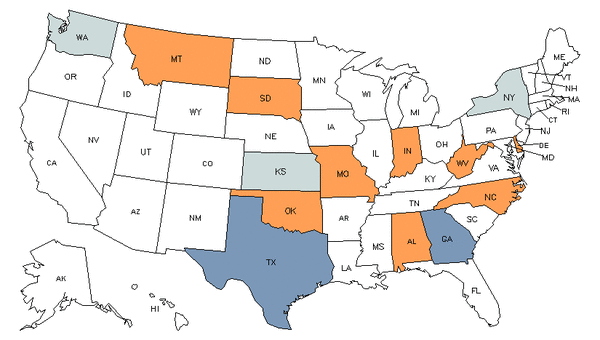
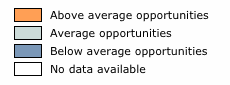
Demand
Core Tasks
- Seal open sides of modular units to prepare them for shipment, using polyethylene sheets, nails, and hammers.
- Move and set up mobile homes or prefabricated buildings on owners' lots or at mobile home parks.
- Inspect, examine, and test the operation of parts or systems to evaluate operating condition and to determine if repairs are needed.
- Connect water hoses to inlet pipes of plumbing systems, and test operation of plumbing fixtures.
- Remove damaged exterior panels, repair and replace structural frame members, and seal leaks, using hand tools.
- List parts needed, estimate costs, and plan work procedures, using parts lists, technical manuals, and diagrams.
- Confer with customers or read work orders to determine the nature and extent of damage to units.
- Install, repair, and replace units, fixtures, appliances, and other items and systems in mobile and modular homes, prefabricated buildings, or travel trailers, using hand tools or power tools.
- Reset hardware, using chisels, mallets, and screwdrivers.
- Connect electrical systems to outside power sources and activate switches to test the operation of appliances and light fixtures.
- Locate and repair frayed wiring, broken connections, or incorrect wiring, using ohmmeters, soldering irons, tape, and hand tools.
- Repair leaks in plumbing or gas lines, using caulking compounds and plastic or copper pipe.
- Open and close doors, windows, and drawers to test their operation, trimming edges to fit, using jackplanes or drawknives.
- Refinish wood surfaces on cabinets, doors, moldings, and floors, using power sanders, putty, spray equipment, brushes, paints, or varnishes.
Technology Skills
Technology
Example
Hot Technology
Tools Used
Tool
Example
Top 10 Knowledge Required
Building and Construction
88%
Knowledge of materials, methods, and the tools involved in the construction or repair of houses, buildings, or other structures such as highways and roads.
Public Safety and Security
83%
Knowledge of relevant equipment, policies, procedures, and strategies to promote effective local, state, or national security operations for the protection of people, data, property, and institutions.
Customer and Personal Service
81%
Knowledge of principles and processes for providing customer and personal services. This includes customer needs assessment, meeting quality standards for services, and evaluation of customer satisfaction.
Design
77%
Knowledge of design techniques, tools, and principles involved in production of precision technical plans, blueprints, drawings, and models.
Transportation
75%
Knowledge of principles and methods for moving people or goods by air, rail, sea, or road, including the relative costs and benefits.
Engineering and Technology
72%
Knowledge of the practical application of engineering science and technology. This includes applying principles, techniques, procedures, and equipment to the design and production of various goods and services.
Mathematics
72%
Knowledge of arithmetic, algebra, geometry, calculus, statistics, and their applications.
Mechanical
71%
Knowledge of machines and tools, including their designs, uses, repair, and maintenance.
Law and Government
67%
Knowledge of laws, legal codes, court procedures, precedents, government regulations, executive orders, agency rules, and the democratic political process.
English Language
65%
Knowledge of the structure and content of the English language including the meaning and spelling of words, and rules of composition and grammar.
Top 10 Skills
Critical Thinking
75%
Using logic and reasoning to identify the strengths and weaknesses of alternative solutions, conclusions, or approaches to problems.
Operation and Control
75%
Controlling operations of equipment or systems.
Quality Control Analysis
75%
Conducting tests and inspections of products, services, or processes to evaluate quality or performance.
Operations Monitoring
73%
Watching gauges, dials, or other indicators to make sure a machine is working properly.
Coordination
70%
Adjusting actions in relation to others' actions.
Judgment and Decision Making
70%
Considering the relative costs and benefits of potential actions to choose the most appropriate one.
Monitoring
70%
Monitoring/Assessing performance of yourself, other individuals, or organizations to make improvements or take corrective action.
Active Learning
68%
Understanding the implications of new information for both current and future problem-solving and decision-making.
Active Listening
68%
Giving full attention to what other people are saying, taking time to understand the points being made, asking questions as appropriate, and not interrupting at inappropriate times.
Complex Problem Solving
68%
Identifying complex problems and reviewing related information to develop and evaluate options and implement solutions.
Top 10 Abilities
Multilimb Coordination
88%
The ability to coordinate two or more limbs (for example, two arms, two legs, or one leg and one arm) while sitting, standing, or lying down. It does not involve performing the activities while the whole body is in motion.
Control Precision
85%
The ability to quickly and repeatedly adjust the controls of a machine or a vehicle to exact positions.
Arm-Hand Steadiness
80%
The ability to keep your hand and arm steady while moving your arm or while holding your arm and hand in one position.
Manual Dexterity
80%
The ability to quickly move your hand, your hand together with your arm, or your two hands to grasp, manipulate, or assemble objects.
Finger Dexterity
78%
The ability to make precisely coordinated movements of the fingers of one or both hands to grasp, manipulate, or assemble very small objects.
Problem Sensitivity
78%
The ability to tell when something is wrong or is likely to go wrong. It does not involve solving the problem, only recognizing that there is a problem.
Reaction Time
78%
The ability to quickly respond (with the hand, finger, or foot) to a signal (sound, light, picture) when it appears.
Near Vision
75%
The ability to see details at close range (within a few feet of the observer).
Trunk Strength
75%
The ability to use your abdominal and lower back muscles to support part of the body repeatedly or continuously over time without "giving out" or fatiguing.
Visualization
75%
The ability to imagine how something will look after it is moved around or when its parts are moved or rearranged.
Top 10 Work Activities
Inspecting Equipment, Structures, or Materials
95%
Inspecting equipment, structures, or materials to identify the cause of errors or other problems or defects.
Controlling Machines and Processes
93%
Using either control mechanisms or direct physical activity to operate machines or processes (not including computers or vehicles).
Making Decisions and Solving Problems
93%
Analyzing information and evaluating results to choose the best solution and solve problems.
Operating Vehicles, Mechanized Devices, or Equipment
93%
Running, maneuvering, navigating, or driving vehicles or mechanized equipment, such as forklifts, passenger vehicles, aircraft, or watercraft.
Evaluating Information to Determine Compliance with Standards
92%
Using relevant information and individual judgment to determine whether events or processes comply with laws, regulations, or standards.
Handling and Moving Objects
92%
Using hands and arms in handling, installing, positioning, and moving materials, and manipulating things.
Performing General Physical Activities
92%
Performing general physical activities includes doing activities that require considerable use of your arms and legs and moving your whole body, such as climbing, lifting, balancing, walking, stooping, and handling materials.
Guiding, Directing, and Motivating Subordinates
91%
Providing guidance and direction to subordinates, including setting performance standards and monitoring performance.
Communicating with Supervisors, Peers, or Subordinates
90%
Providing information to supervisors, co-workers, and subordinates by telephone, in written form, e-mail, or in person.
Coordinating the Work and Activities of Others
90%
Getting members of a group to work together to accomplish tasks.
Detailed Work Activities
- Seal gaps or cracks to prevent leakage or moisture intrusion.
- Move large objects using heavy equipment.
- Install prefabricated or manufactured structures.
- Inspect systems to determine if they are operating properly.
- Test mechanical equipment to ensure proper functioning.
- Connect hoses to equipment or piping.
- Remove parts or components from equipment.
- Repair structural components.
- Estimate costs for labor or materials.
- Plan work procedures.
- Record information about parts, materials or repair procedures.
- Read work orders or descriptions of problems to determine repairs or modifications needed.
- Confer with customers or users to assess problems.
- Install home appliances.
- Reassemble equipment after repair.
- Repair pipes to stop leaking.
- Repair electrical circuits or wiring.
- Cut materials according to specifications or needs.
- Control power supply connections.
- Connect electrical components or equipment.
- Refinish wood or metal surfaces.
Education
Interests
Realistic
98%
Work involves designing, building, or repairing of equipment, materials, or structures, engaging in physical activity, or working outdoors. Realistic occupations are often associated with engineering, mechanics and electronics, construction, woodworking, transportation, machine operation, agriculture, animal services, physical or manual labor, athletics, or protective services.
Conventional
56%
Work involves following procedures and regulations to organize information or data, typically in a business setting. Conventional occupations are often associated with office work, accounting, mathematics/statistics, information technology, finance, or human resources.
Investigative
28%
Work involves studying and researching non-living objects, living organisms, disease or other forms of impairment, or human behavior. Investigative occupations are often associated with physical, life, medical, or social sciences, and can be found in the fields of humanities, mathematics/statistics, information technology, or health care service.
Social
25%
Work involves helping, teaching, advising, assisting, or providing service to others. Social occupations are often associated with social, health care, personal service, teaching/education, or religious activities.
Artistic
22%
Work involves creating original visual artwork, performances, written works, food, or music for a variety of media, or applying artistic principles to the design of various objects and materials. Artistic occupations are often associated with visual arts, applied arts and design, performing arts, music, creative writing, media, or culinary art.
Enterprising
17%
Work involves managing, negotiating, marketing, or selling, typically in a business setting, or leading or advising people in political and legal situations. Enterprising occupations are often associated with business initiatives, sales, marketing/advertising, finance, management/administration, professional advising, public speaking, politics, or law.
Work Values
Support
77%
Occupations that satisfy this work value offer supportive management that stands behind employees. Corresponding needs are Company Policies, Supervision: Human Relations and Supervision: Technical.
Relationships
72%
Occupations that satisfy this work value allow employees to provide service to others and work with co-workers in a friendly non-competitive environment. Corresponding needs are Co-workers, Moral Values and Social Service.
Independence
58%
Occupations that satisfy this work value allow employees to work on their own and make decisions. Corresponding needs are Creativity, Responsibility and Autonomy.
Working Conditions
48%
Occupations that satisfy this work value offer job security and good working conditions. Corresponding needs are Activity, Compensation, Independence, Security, Variety and Working Conditions.
Achievement
43%
Occupations that satisfy this work value are results oriented and allow employees to use their strongest abilities, giving them a feeling of accomplishment. Corresponding needs are Ability Utilization and Achievement.
Recognition
34%
Occupations that satisfy this work value offer advancement, potential for leadership, and are often considered prestigious. Corresponding needs are Advancement, Authority, Recognition and Social Status.
Colleges
SAGE Scholars Member Schools that offer majors leading to this career.
Check out the College Search to see the full list of schools with majors for this career.