Automotive and Watercraft Service Attendants
Overview
SaveJob Zone Two: Some Preparation Needed
Experience
Some previous work-related skill, knowledge, or experience is usually needed. For example, a teller would benefit from experience working directly with the public.
Education
These occupations usually require a high school diploma.
Job Training
Employees in these occupations need anywhere from a few months to one year of working with experienced employees. A recognized apprenticeship program may be associated with these occupations.
Examples
These occupations often involve using your knowledge and skills to help others. Examples include orderlies, counter and rental clerks, customer service representatives, security guards, upholsterers, tellers, and dental laboratory technicians.
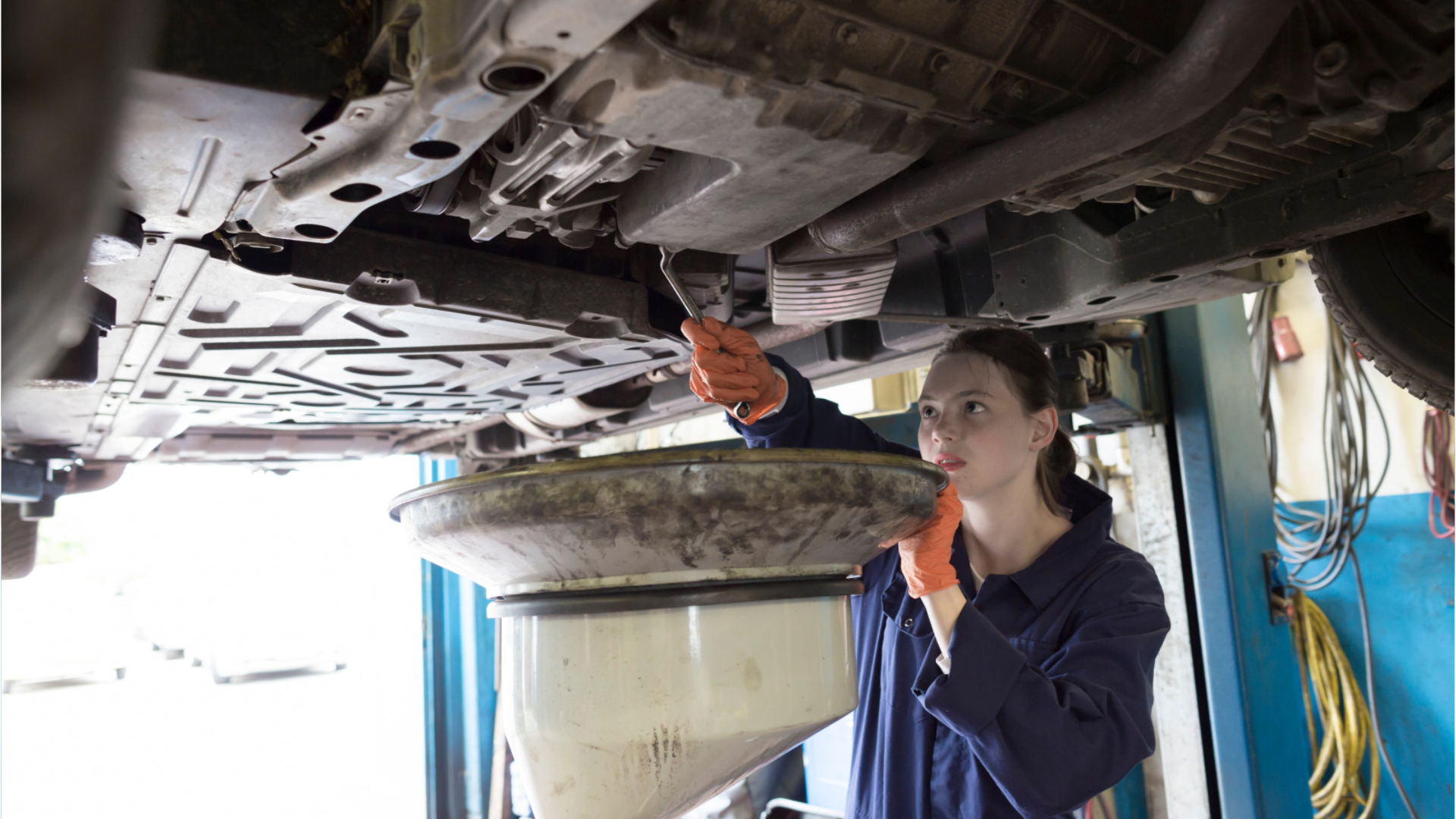
Service automobiles, buses, trucks, boats, and other automotive or marine vehicles with fuel, lubricants, and accessories. Collect payment for services and supplies. May lubricate vehicle, change motor oil, refill antifreeze, or replace lights or other accessories, such as windshield wiper blades or fan belts. May repair or replace tires.
Yearly Salary
| High: | $38K |
| Median: | $26K |
| Low: | $21K |
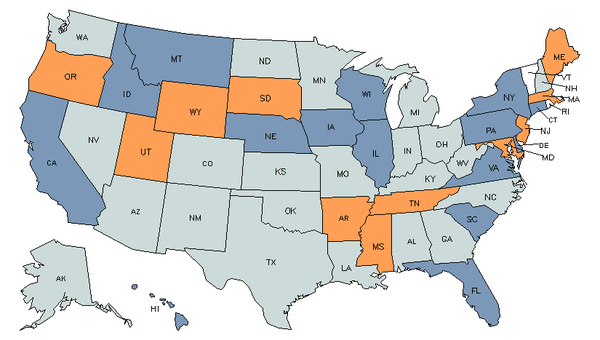
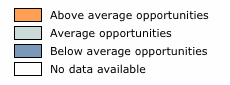
Demand
Core Tasks
- Collect cash payments from customers, and make change or charge purchases to customers' credit cards, providing customers with receipts.
- Check tire pressure and levels of fuel, motor oil, transmission, radiator, battery, or other fluids, adding air or fluids as required.
- Prepare daily reports of fuel, oil, and accessory sales.
- Clean windshields.
- Perform minor repairs, such as adjusting brakes, replacing spark plugs, or changing engine oil or filters.
- Clean parking areas, offices, restrooms, or equipment, and remove trash.
- Order stock, and price and shelve incoming goods.
- Activate fuel pumps and fill fuel tanks of vehicles with gasoline or diesel fuel to specified levels.
- Grease and lubricate vehicles or specified units, such as springs, universal joints, or steering knuckles, using grease guns or spray lubricants.
- Sell and install accessories, such as batteries, windshield wiper blades, fan belts, bulbs, or headlamps.
- Test and charge batteries.
- Rotate, test, and repair or replace tires.
- Maintain customer records and follow up periodically with telephone, mail, or personal reminders of services due.
- Provide customers with information about local roads or highways.
Technology Skills
Technology
Example
Hot Technology
Tools Used
Tool
Example
Top 10 Knowledge Required
Customer and Personal Service
93%
Knowledge of principles and processes for providing customer and personal services. This includes customer needs assessment, meeting quality standards for services, and evaluation of customer satisfaction.
Mechanical
88%
Knowledge of machines and tools, including their designs, uses, repair, and maintenance.
Sales and Marketing
80%
Knowledge of principles and methods for showing, promoting, and selling products or services. This includes marketing strategy and tactics, product demonstration, sales techniques, and sales control systems.
Administration and Management
76%
Knowledge of business and management principles involved in strategic planning, resource allocation, human resources modeling, leadership technique, production methods, and coordination of people and resources.
Mathematics
66%
Knowledge of arithmetic, algebra, geometry, calculus, statistics, and their applications.
Administrative
60%
Knowledge of administrative and office procedures and systems such as word processing, managing files and records, stenography and transcription, designing forms, and workplace terminology.
Education and Training
60%
Knowledge of principles and methods for curriculum and training design, teaching and instruction for individuals and groups, and the measurement of training effects.
Engineering and Technology
60%
Knowledge of the practical application of engineering science and technology. This includes applying principles, techniques, procedures, and equipment to the design and production of various goods and services.
Chemistry
59%
Knowledge of the chemical composition, structure, and properties of substances and of the chemical processes and transformations that they undergo. This includes uses of chemicals and their interactions, danger signs, production techniques, and disposal methods.
Computers and Electronics
58%
Knowledge of circuit boards, processors, chips, electronic equipment, and computer hardware and software, including applications and programming.
Top 10 Skills
Active Listening
63%
Giving full attention to what other people are saying, taking time to understand the points being made, asking questions as appropriate, and not interrupting at inappropriate times.
Operation and Control
63%
Controlling operations of equipment or systems.
Service Orientation
63%
Actively looking for ways to help people.
Speaking
63%
Talking to others to convey information effectively.
Time Management
63%
Managing one's own time and the time of others.
Complex Problem Solving
60%
Identifying complex problems and reviewing related information to develop and evaluate options and implement solutions.
Coordination
60%
Adjusting actions in relation to others' actions.
Critical Thinking
60%
Using logic and reasoning to identify the strengths and weaknesses of alternative solutions, conclusions, or approaches to problems.
Equipment Maintenance
60%
Performing routine maintenance on equipment and determining when and what kind of maintenance is needed.
Judgment and Decision Making
60%
Considering the relative costs and benefits of potential actions to choose the most appropriate one.
Top 10 Abilities
Oral Comprehension
68%
The ability to listen to and understand information and ideas presented through spoken words and sentences.
Oral Expression
68%
The ability to communicate information and ideas in speaking so others will understand.
Control Precision
65%
The ability to quickly and repeatedly adjust the controls of a machine or a vehicle to exact positions.
Finger Dexterity
65%
The ability to make precisely coordinated movements of the fingers of one or both hands to grasp, manipulate, or assemble very small objects.
Manual Dexterity
65%
The ability to quickly move your hand, your hand together with your arm, or your two hands to grasp, manipulate, or assemble objects.
Near Vision
65%
The ability to see details at close range (within a few feet of the observer).
Trunk Strength
65%
The ability to use your abdominal and lower back muscles to support part of the body repeatedly or continuously over time without "giving out" or fatiguing.
Arm-Hand Steadiness
63%
The ability to keep your hand and arm steady while moving your arm or while holding your arm and hand in one position.
Deductive Reasoning
63%
The ability to apply general rules to specific problems to produce answers that make sense.
Extent Flexibility
63%
The ability to bend, stretch, twist, or reach with your body, arms, and/or legs.
Top 10 Work Activities
Getting Information
85%
Observing, receiving, and otherwise obtaining information from all relevant sources.
Controlling Machines and Processes
82%
Using either control mechanisms or direct physical activity to operate machines or processes (not including computers or vehicles).
Making Decisions and Solving Problems
78%
Analyzing information and evaluating results to choose the best solution and solve problems.
Operating Vehicles, Mechanized Devices, or Equipment
78%
Running, maneuvering, navigating, or driving vehicles or mechanized equipment, such as forklifts, passenger vehicles, aircraft, or watercraft.
Communicating with People Outside the Organization
77%
Communicating with people outside the organization, representing the organization to customers, the public, government, and other external sources. This information can be exchanged in person, in writing, or by telephone or e-mail.
Performing for or Working Directly with the Public
77%
Performing for people or dealing directly with the public. This includes serving customers in restaurants and stores, and receiving clients or guests.
Handling and Moving Objects
75%
Using hands and arms in handling, installing, positioning, and moving materials, and manipulating things.
Identifying Objects, Actions, and Events
73%
Identifying information by categorizing, estimating, recognizing differences or similarities, and detecting changes in circumstances or events.
Inspecting Equipment, Structures, or Materials
72%
Inspecting equipment, structures, or materials to identify the cause of errors or other problems or defects.
Performing General Physical Activities
72%
Performing general physical activities includes doing activities that require considerable use of your arms and legs and moving your whole body, such as climbing, lifting, balancing, walking, stooping, and handling materials.
Detailed Work Activities
- Collect fares or payment from customers.
- Measure the level or depth of water or other liquids.
- Maintain vehicles in good working condition.
- Clean facilities or work areas.
- Clean machinery or equipment.
- Acquire supplies or equipment.
- Install parts, assemblies, or attachments in transportation or material handling equipment.
- Sell products or services.
- Maintain watercraft engines or machinery.
- Record sales or transactions data.
- Clean vehicles or vehicle components.
- Control pumps or pumping equipment.
- Inspect motor vehicles.
- Provide transportation information to passengers or customers.
Education
Interests
Realistic
92%
Work involves designing, building, or repairing of equipment, materials, or structures, engaging in physical activity, or working outdoors. Realistic occupations are often associated with engineering, mechanics and electronics, construction, woodworking, transportation, machine operation, agriculture, animal services, physical or manual labor, athletics, or protective services.
Conventional
63%
Work involves following procedures and regulations to organize information or data, typically in a business setting. Conventional occupations are often associated with office work, accounting, mathematics/statistics, information technology, finance, or human resources.
Enterprising
31%
Work involves managing, negotiating, marketing, or selling, typically in a business setting, or leading or advising people in political and legal situations. Enterprising occupations are often associated with business initiatives, sales, marketing/advertising, finance, management/administration, professional advising, public speaking, politics, or law.
Social
29%
Work involves helping, teaching, advising, assisting, or providing service to others. Social occupations are often associated with social, health care, personal service, teaching/education, or religious activities.
Investigative
19%
Work involves studying and researching non-living objects, living organisms, disease or other forms of impairment, or human behavior. Investigative occupations are often associated with physical, life, medical, or social sciences, and can be found in the fields of humanities, mathematics/statistics, information technology, or health care service.
Artistic
15%
Work involves creating original visual artwork, performances, written works, food, or music for a variety of media, or applying artistic principles to the design of various objects and materials. Artistic occupations are often associated with visual arts, applied arts and design, performing arts, music, creative writing, media, or culinary art.
Work Values
Support
67%
Occupations that satisfy this work value offer supportive management that stands behind employees. Corresponding needs are Company Policies, Supervision: Human Relations and Supervision: Technical.
Relationships
48%
Occupations that satisfy this work value allow employees to provide service to others and work with co-workers in a friendly non-competitive environment. Corresponding needs are Co-workers, Moral Values and Social Service.
Independence
43%
Occupations that satisfy this work value allow employees to work on their own and make decisions. Corresponding needs are Creativity, Responsibility and Autonomy.
Working Conditions
31%
Occupations that satisfy this work value offer job security and good working conditions. Corresponding needs are Activity, Compensation, Independence, Security, Variety and Working Conditions.
Achievement
24%
Occupations that satisfy this work value are results oriented and allow employees to use their strongest abilities, giving them a feeling of accomplishment. Corresponding needs are Ability Utilization and Achievement.
Recognition
24%
Occupations that satisfy this work value offer advancement, potential for leadership, and are often considered prestigious. Corresponding needs are Advancement, Authority, Recognition and Social Status.