Set and Exhibit Designers
Overview
SaveJob Zone Five: Extensive Preparation Needed
Experience
Extensive skill, knowledge, and experience are needed for these occupations. Many require more than five years of experience. For example, surgeons must complete four years of college and an additional five to seven years of specialized medical training to be able to do their job.
Education
Most of these occupations require graduate school. For example, they may require a master's degree, and some require a Ph.D., M.D., or J.D. (law degree).
Job Training
Employees may need some on-the-job training, but most of these occupations assume that the person will already have the required skills, knowledge, work-related experience, and/or training.
Examples
These occupations often involve coordinating, training, supervising, or managing the activities of others to accomplish goals. Very advanced communication and organizational skills are required. Examples include pharmacists, lawyers, astronomers, biologists, clergy, physician assistants, and veterinarians.
Design special exhibits and sets for film, video, television, and theater productions. May study scripts, confer with directors, and conduct research to determine appropriate architectural styles.

Yearly Salary
| High: | $106K |
| Median: | $58K |
| Low: | $30K |
Demand
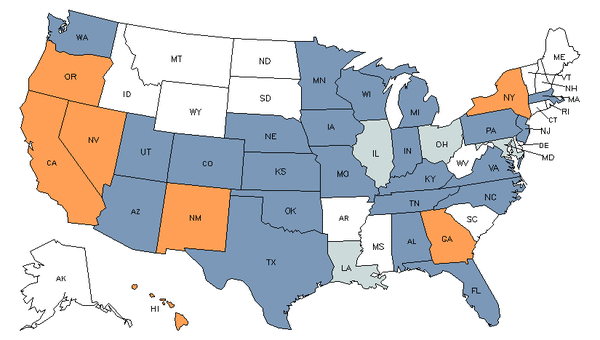
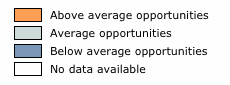
Core Tasks
- Develop set designs, based on evaluation of scripts, budgets, research information, and available locations.
- Prepare preliminary renderings of proposed exhibits, including detailed construction, layout, and material specifications, and diagrams relating to aspects such as special effects or lighting.
- Prepare rough drafts and scale working drawings of sets, including floor plans, scenery, and properties to be constructed.
- Read scripts to determine location, set, and design requirements.
- Submit plans for approval, and adapt plans to serve intended purposes, or to conform to budget or fabrication restrictions.
- Attend rehearsals and production meetings to obtain and share information related to sets.
- Confer with clients and staff to gather information about exhibit space, proposed themes and content, timelines, budgets, materials, or promotion requirements.
- Research architectural and stylistic elements appropriate to the time period to be depicted, consulting experts for information, as necessary.
- Observe sets during rehearsals in order to ensure that set elements do not interfere with performance aspects such as cast movement and camera angles.
- Collaborate with those in charge of lighting and sound so that those production aspects can be coordinated with set designs or exhibit layouts.
- Select set props, such as furniture, pictures, lamps, and rugs.
- Design and build scale models of set designs, or miniature sets used in filming backgrounds or special effects.
- Examine objects to be included in exhibits to plan where and how to display them.
- Assign staff to complete design ideas and prepare sketches, illustrations, and detailed drawings of sets, or graphics and animation.
- Direct and coordinate construction, erection, or decoration activities to ensure that sets or exhibits meet design, budget, and schedule requirements.
- Inspect installed exhibits for conformance to specifications and satisfactory operation of special-effects components.
- Coordinate the transportation of sets that are built off-site, and coordinate their setup at the site of use.
- Estimate set- or exhibit-related costs, including materials, construction, and rental of props or locations.
- Confer with conservators to determine how to handle an exhibit's environmental aspects, such as lighting, temperature, and humidity, so that objects will be protected and exhibits will be enhanced.
- Plan for location-specific issues, such as space limitations, traffic flow patterns, and safety concerns.
- Select and purchase lumber and hardware necessary for set construction.
- Acquire, or arrange for acquisition of, specimens or graphics required to complete exhibits.
- Arrange for outside contractors to construct exhibit structures.
- Design and produce displays and materials that can be used to decorate windows, interior displays, or event locations, such as streets and fairgrounds.
- Incorporate security systems into exhibit layouts.
- Coordinate the removal of sets, props, and exhibits after productions or events are complete.
- Provide supportive materials for exhibits and displays, such as press kits, advertising, publicity notices, posters, brochures, catalogues, and invitations.
Technology Skills
Technology
Example
Hot Technology
Tools Used
Tool
Example
Top 10 Knowledge Required
Fine Arts
99%
Knowledge of the theory and techniques required to compose, produce, and perform works of music, dance, visual arts, drama, and sculpture.
Design
98%
Knowledge of design techniques, tools, and principles involved in production of precision technical plans, blueprints, drawings, and models.
Computers and Electronics
77%
Knowledge of circuit boards, processors, chips, electronic equipment, and computer hardware and software, including applications and programming.
Building and Construction
71%
Knowledge of materials, methods, and the tools involved in the construction or repair of houses, buildings, or other structures such as highways and roads.
History and Archeology
69%
Knowledge of historical events and their causes, indicators, and effects on civilizations and cultures.
English Language
65%
Knowledge of the structure and content of the English language including the meaning and spelling of words, and rules of composition and grammar.
Communications and Media
63%
Knowledge of media production, communication, and dissemination techniques and methods. This includes alternative ways to inform and entertain via written, oral, and visual media.
Mathematics
61%
Knowledge of arithmetic, algebra, geometry, calculus, statistics, and their applications.
Production and Processing
61%
Knowledge of raw materials, production processes, quality control, costs, and other techniques for maximizing the effective manufacture and distribution of goods.
Administration and Management
60%
Knowledge of business and management principles involved in strategic planning, resource allocation, human resources modeling, leadership technique, production methods, and coordination of people and resources.
Top 10 Skills
Active Listening
78%
Giving full attention to what other people are saying, taking time to understand the points being made, asking questions as appropriate, and not interrupting at inappropriate times.
Reading Comprehension
78%
Understanding written sentences and paragraphs in work-related documents.
Critical Thinking
75%
Using logic and reasoning to identify the strengths and weaknesses of alternative solutions, conclusions, or approaches to problems.
Operations Analysis
75%
Analyzing needs and product requirements to create a design.
Speaking
75%
Talking to others to convey information effectively.
Time Management
75%
Managing one's own time and the time of others.
Coordination
70%
Adjusting actions in relation to others' actions.
Complex Problem Solving
68%
Identifying complex problems and reviewing related information to develop and evaluate options and implement solutions.
Judgment and Decision Making
68%
Considering the relative costs and benefits of potential actions to choose the most appropriate one.
Writing
65%
Communicating effectively in writing as appropriate for the needs of the audience.
Top 10 Abilities
Fluency of Ideas
83%
The ability to come up with a number of ideas about a topic (the number of ideas is important, not their quality, correctness, or creativity).
Oral Comprehension
80%
The ability to listen to and understand information and ideas presented through spoken words and sentences.
Visualization
80%
The ability to imagine how something will look after it is moved around or when its parts are moved or rearranged.
Originality
78%
The ability to come up with unusual or clever ideas about a given topic or situation, or to develop creative ways to solve a problem.
Problem Sensitivity
78%
The ability to tell when something is wrong or is likely to go wrong. It does not involve solving the problem, only recognizing that there is a problem.
Written Comprehension
78%
The ability to read and understand information and ideas presented in writing.
Information Ordering
75%
The ability to arrange things or actions in a certain order or pattern according to a specific rule or set of rules (e.g., patterns of numbers, letters, words, pictures, mathematical operations).
Near Vision
75%
The ability to see details at close range (within a few feet of the observer).
Oral Expression
75%
The ability to communicate information and ideas in speaking so others will understand.
Speech Recognition
75%
The ability to identify and understand the speech of another person.
Top 10 Work Activities
Thinking Creatively
97%
Developing, designing, or creating new applications, ideas, relationships, systems, or products, including artistic contributions.
Getting Information
94%
Observing, receiving, and otherwise obtaining information from all relevant sources.
Drafting, Laying Out, and Specifying Technical Devices, Parts, and Equipment
91%
Providing documentation, detailed instructions, drawings, or specifications to tell others about how devices, parts, equipment, or structures are to be fabricated, constructed, assembled, modified, maintained, or used.
Communicating with Supervisors, Peers, or Subordinates
89%
Providing information to supervisors, co-workers, and subordinates by telephone, in written form, e-mail, or in person.
Establishing and Maintaining Interpersonal Relationships
87%
Developing constructive and cooperative working relationships with others, and maintaining them over time.
Making Decisions and Solving Problems
86%
Analyzing information and evaluating results to choose the best solution and solve problems.
Organizing, Planning, and Prioritizing Work
86%
Developing specific goals and plans to prioritize, organize, and accomplish your work.
Updating and Using Relevant Knowledge
78%
Keeping up-to-date technically and applying new knowledge to your job.
Working with Computers
78%
Using computers and computer systems (including hardware and software) to program, write software, set up functions, enter data, or process information.
Scheduling Work and Activities
70%
Scheduling events, programs, and activities, as well as the work of others.
Detailed Work Activities
- Develop artistic or design concepts for decoration, exhibition, or commercial purposes.
- Draw detailed or technical illustrations.
- Determine technical requirements of productions or projects.
- Study scripts to determine project requirements.
- Present work to clients for approval.
- Discuss production content and progress with others.
- Confer with clients to determine needs.
- Conduct research to inform art, designs, or other work.
- Inspect sets or exhibits.
- Collaborate with others to determine technical details of productions.
- Select materials or props.
- Design layout of art or product exhibits, displays, or promotional materials.
- Build models, patterns, or templates.
- Coordinate design activities.
- Estimate costs for projects or productions.
- Coordinate logistics for productions or events.
- Maintain inventories of materials, equipment, or products.
- Construct distinctive physical objects for artistic, functional, or commercial purposes.
- Coordinate construction or installation activities.
- Maintain security.
- Construct exhibits or parts of exhibits.
- Promote products, activities, or organizations.
Education
Interests
Artistic
100%
Work involves creating original visual artwork, performances, written works, food, or music for a variety of media, or applying artistic principles to the design of various objects and materials. Artistic occupations are often associated with visual arts, applied arts and design, performing arts, music, creative writing, media, or culinary art.
Enterprising
56%
Work involves managing, negotiating, marketing, or selling, typically in a business setting, or leading or advising people in political and legal situations. Enterprising occupations are often associated with business initiatives, sales, marketing/advertising, finance, management/administration, professional advising, public speaking, politics, or law.
Realistic
51%
Work involves designing, building, or repairing of equipment, materials, or structures, engaging in physical activity, or working outdoors. Realistic occupations are often associated with engineering, mechanics and electronics, construction, woodworking, transportation, machine operation, agriculture, animal services, physical or manual labor, athletics, or protective services.
Conventional
47%
Work involves following procedures and regulations to organize information or data, typically in a business setting. Conventional occupations are often associated with office work, accounting, mathematics/statistics, information technology, finance, or human resources.
Social
44%
Work involves helping, teaching, advising, assisting, or providing service to others. Social occupations are often associated with social, health care, personal service, teaching/education, or religious activities.
Investigative
41%
Work involves studying and researching non-living objects, living organisms, disease or other forms of impairment, or human behavior. Investigative occupations are often associated with physical, life, medical, or social sciences, and can be found in the fields of humanities, mathematics/statistics, information technology, or health care service.
Work Values
Achievement
81%
Occupations that satisfy this work value are results oriented and allow employees to use their strongest abilities, giving them a feeling of accomplishment. Corresponding needs are Ability Utilization and Achievement.
Independence
72%
Occupations that satisfy this work value allow employees to work on their own and make decisions. Corresponding needs are Creativity, Responsibility and Autonomy.
Working Conditions
67%
Occupations that satisfy this work value offer job security and good working conditions. Corresponding needs are Activity, Compensation, Independence, Security, Variety and Working Conditions.
Recognition
53%
Occupations that satisfy this work value offer advancement, potential for leadership, and are often considered prestigious. Corresponding needs are Advancement, Authority, Recognition and Social Status.
Support
53%
Occupations that satisfy this work value offer supportive management that stands behind employees. Corresponding needs are Company Policies, Supervision: Human Relations and Supervision: Technical.
Relationships
48%
Occupations that satisfy this work value allow employees to provide service to others and work with co-workers in a friendly non-competitive environment. Corresponding needs are Co-workers, Moral Values and Social Service.
Colleges
SAGE Scholars Member Schools that offer majors leading to this career.
Check out the College Search to see the full list of schools with majors for this career.