Boilermakers
Overview
SaveJob Zone Two: Some Preparation Needed
Experience
Some previous work-related skill, knowledge, or experience is usually needed. For example, a teller would benefit from experience working directly with the public.
Education
These occupations usually require a high school diploma.
Job Training
Employees in these occupations need anywhere from a few months to one year of working with experienced employees. A recognized apprenticeship program may be associated with these occupations.
Examples
These occupations often involve using your knowledge and skills to help others. Examples include orderlies, counter and rental clerks, customer service representatives, security guards, upholsterers, tellers, and dental laboratory technicians.
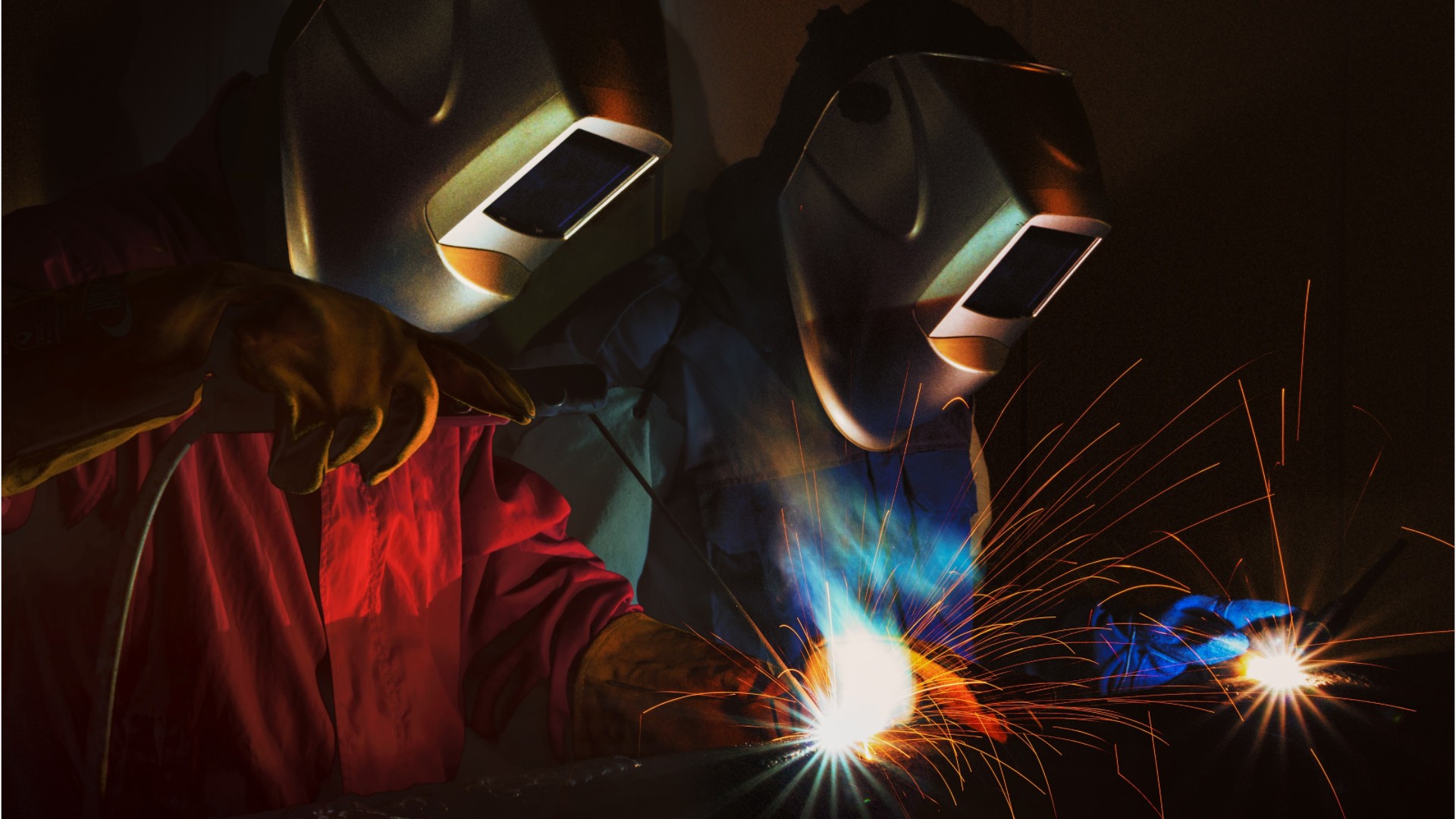
Construct, assemble, maintain, and repair stationary steam boilers and boiler house auxiliaries. Align structures or plate sections to assemble boiler frame tanks or vats, following blueprints. Work involves use of hand and power tools, plumb bobs, levels, wedges, dogs, or turnbuckles. Assist in testing assembled vessels. Direct cleaning of boilers and boiler furnaces. Inspect and repair boiler fittings, such as safety valves, regulators, automatic-control mechanisms, water columns, and auxiliary machines.
Yearly Salary
| High: | $99K |
| Median: | $65K |
| Low: | $39K |
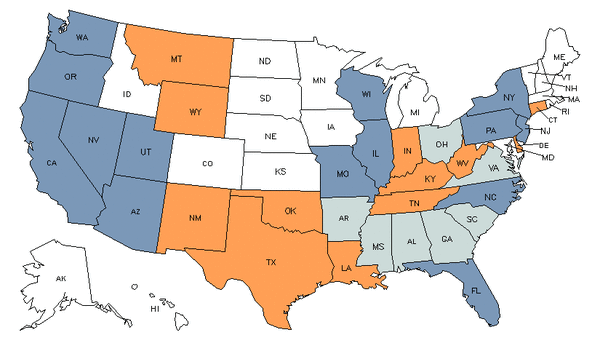
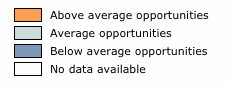
Demand
Core Tasks
- Conduct pressure tests on vessels, such as boilers.
- Study blueprints to determine locations, relationships, or dimensions of parts.
- Assemble large vessels in an on-site fabrication shop prior to installation to ensure proper fit.
- Examine boilers, pressure vessels, tanks, or vats to locate defects, such as leaks, weak spots, or defective sections, so that they can be repaired.
- Inspect assembled vessels or individual components, such as tubes, fittings, valves, controls, or auxiliary mechanisms, to locate any defects.
- Bell, bead with power hammers, or weld pressure vessel tube ends to ensure leakproof joints.
- Lay out plate, sheet steel, or other heavy metal and locate and mark bending and cutting lines, using protractors, compasses, and drawing instruments or templates.
- Locate and mark reference points for columns or plates on boiler foundations, following blueprints and using straightedges, squares, transits, or measuring instruments.
- Shape or fabricate parts, such as stacks, uptakes, or chutes, to adapt pressure vessels, heat exchangers, or piping to premises, using heavy-metalworking machines such as brakes, rolls, or drill presses.
- Clean pressure vessel equipment, using scrapers, wire brushes, and cleaning solvents.
- Position, align, and secure structural parts or related assemblies to boiler frames, tanks, or vats of pressure vessels, following blueprints.
- Attach rigging and signal crane or hoist operators to lift heavy frame and plate sections or other parts into place.
- Repair or replace defective pressure vessel parts, such as safety valves or regulators, using torches, jacks, caulking hammers, power saws, threading dies, welding equipment, or metalworking machinery.
- Shape seams, joints, or irregular edges of pressure vessel sections or structural parts to attain specified fit of parts, using cutting torches, hammers, files, or metalworking machines.
- Straighten or reshape bent pressure vessel plates or structure parts, using hammers, jacks, or torches.
- Bolt or arc weld pressure vessel structures and parts together, using wrenches or welding equipment.
- Install manholes, handholes, taps, tubes, valves, gauges, or feedwater connections in drums of water tube boilers, using hand tools.
- Install refractory bricks or other heat-resistant materials in fireboxes of pressure vessels.
Technology Skills
Technology
Example
Hot Technology
Tools Used
Tool
Example
Top 10 Knowledge Required
Mechanical
83%
Knowledge of machines and tools, including their designs, uses, repair, and maintenance.
English Language
66%
Knowledge of the structure and content of the English language including the meaning and spelling of words, and rules of composition and grammar.
Mathematics
64%
Knowledge of arithmetic, algebra, geometry, calculus, statistics, and their applications.
Administration and Management
59%
Knowledge of business and management principles involved in strategic planning, resource allocation, human resources modeling, leadership technique, production methods, and coordination of people and resources.
Building and Construction
57%
Knowledge of materials, methods, and the tools involved in the construction or repair of houses, buildings, or other structures such as highways and roads.
Computers and Electronics
53%
Knowledge of circuit boards, processors, chips, electronic equipment, and computer hardware and software, including applications and programming.
Design
50%
Knowledge of design techniques, tools, and principles involved in production of precision technical plans, blueprints, drawings, and models.
Engineering and Technology
50%
Knowledge of the practical application of engineering science and technology. This includes applying principles, techniques, procedures, and equipment to the design and production of various goods and services.
Physics
50%
Knowledge and prediction of physical principles, laws, their interrelationships, and applications to understanding fluid, material, and atmospheric dynamics, and mechanical, electrical, atomic and sub-atomic structures and processes.
Customer and Personal Service
48%
Knowledge of principles and processes for providing customer and personal services. This includes customer needs assessment, meeting quality standards for services, and evaluation of customer satisfaction.
Top 10 Skills
Operations Monitoring
80%
Watching gauges, dials, or other indicators to make sure a machine is working properly.
Operation and Control
75%
Controlling operations of equipment or systems.
Critical Thinking
70%
Using logic and reasoning to identify the strengths and weaknesses of alternative solutions, conclusions, or approaches to problems.
Equipment Maintenance
63%
Performing routine maintenance on equipment and determining when and what kind of maintenance is needed.
Quality Control Analysis
63%
Conducting tests and inspections of products, services, or processes to evaluate quality or performance.
Repairing
63%
Repairing machines or systems using the needed tools.
Troubleshooting
63%
Determining causes of operating errors and deciding what to do about it.
Active Learning
60%
Understanding the implications of new information for both current and future problem-solving and decision-making.
Active Listening
60%
Giving full attention to what other people are saying, taking time to understand the points being made, asking questions as appropriate, and not interrupting at inappropriate times.
Complex Problem Solving
60%
Identifying complex problems and reviewing related information to develop and evaluate options and implement solutions.
Top 10 Abilities
Control Precision
80%
The ability to quickly and repeatedly adjust the controls of a machine or a vehicle to exact positions.
Near Vision
80%
The ability to see details at close range (within a few feet of the observer).
Deductive Reasoning
78%
The ability to apply general rules to specific problems to produce answers that make sense.
Problem Sensitivity
78%
The ability to tell when something is wrong or is likely to go wrong. It does not involve solving the problem, only recognizing that there is a problem.
Arm-Hand Steadiness
75%
The ability to keep your hand and arm steady while moving your arm or while holding your arm and hand in one position.
Finger Dexterity
75%
The ability to make precisely coordinated movements of the fingers of one or both hands to grasp, manipulate, or assemble very small objects.
Manual Dexterity
75%
The ability to quickly move your hand, your hand together with your arm, or your two hands to grasp, manipulate, or assemble objects.
Multilimb Coordination
73%
The ability to coordinate two or more limbs (for example, two arms, two legs, or one leg and one arm) while sitting, standing, or lying down. It does not involve performing the activities while the whole body is in motion.
Inductive Reasoning
70%
The ability to combine pieces of information to form general rules or conclusions (includes finding a relationship among seemingly unrelated events).
Oral Comprehension
63%
The ability to listen to and understand information and ideas presented through spoken words and sentences.
Top 10 Work Activities
Repairing and Maintaining Mechanical Equipment
83%
Servicing, repairing, adjusting, and testing machines, devices, moving parts, and equipment that operate primarily on the basis of mechanical (not electronic) principles.
Inspecting Equipment, Structures, or Materials
80%
Inspecting equipment, structures, or materials to identify the cause of errors or other problems or defects.
Getting Information
79%
Observing, receiving, and otherwise obtaining information from all relevant sources.
Making Decisions and Solving Problems
76%
Analyzing information and evaluating results to choose the best solution and solve problems.
Operating Vehicles, Mechanized Devices, or Equipment
75%
Running, maneuvering, navigating, or driving vehicles or mechanized equipment, such as forklifts, passenger vehicles, aircraft, or watercraft.
Performing General Physical Activities
75%
Performing general physical activities includes doing activities that require considerable use of your arms and legs and moving your whole body, such as climbing, lifting, balancing, walking, stooping, and handling materials.
Identifying Objects, Actions, and Events
74%
Identifying information by categorizing, estimating, recognizing differences or similarities, and detecting changes in circumstances or events.
Updating and Using Relevant Knowledge
71%
Keeping up-to-date technically and applying new knowledge to your job.
Communicating with Supervisors, Peers, or Subordinates
70%
Providing information to supervisors, co-workers, and subordinates by telephone, in written form, e-mail, or in person.
Handling and Moving Objects
68%
Using hands and arms in handling, installing, positioning, and moving materials, and manipulating things.
Detailed Work Activities
- Test products for functionality or quality.
- Test performance of electrical, electronic, mechanical, or integrated systems or equipment.
- Review blueprints or specifications to determine work requirements.
- Inspect industrial or commercial equipment to ensure proper operation.
- Mark reference points on construction materials.
- Weld metal components.
- Measure materials or objects for installation or assembly.
- Fabricate parts or components.
- Install metal structural components.
- Position structural components.
- Clean equipment or facilities.
- Maintain mechanical equipment.
- Operate cranes, hoists, or other moving or lifting equipment.
- Signal equipment operators to indicate proper equipment positioning.
- Install gauges or controls.
- Assemble products or production equipment.
- Install masonry materials.
Education
Interests
Realistic
100%
Work involves designing, building, or repairing of equipment, materials, or structures, engaging in physical activity, or working outdoors. Realistic occupations are often associated with engineering, mechanics and electronics, construction, woodworking, transportation, machine operation, agriculture, animal services, physical or manual labor, athletics, or protective services.
Conventional
53%
Work involves following procedures and regulations to organize information or data, typically in a business setting. Conventional occupations are often associated with office work, accounting, mathematics/statistics, information technology, finance, or human resources.
Investigative
33%
Work involves studying and researching non-living objects, living organisms, disease or other forms of impairment, or human behavior. Investigative occupations are often associated with physical, life, medical, or social sciences, and can be found in the fields of humanities, mathematics/statistics, information technology, or health care service.
Artistic
15%
Work involves creating original visual artwork, performances, written works, food, or music for a variety of media, or applying artistic principles to the design of various objects and materials. Artistic occupations are often associated with visual arts, applied arts and design, performing arts, music, creative writing, media, or culinary art.
Enterprising
15%
Work involves managing, negotiating, marketing, or selling, typically in a business setting, or leading or advising people in political and legal situations. Enterprising occupations are often associated with business initiatives, sales, marketing/advertising, finance, management/administration, professional advising, public speaking, politics, or law.
Social
15%
Work involves helping, teaching, advising, assisting, or providing service to others. Social occupations are often associated with social, health care, personal service, teaching/education, or religious activities.
Work Values
Support
72%
Occupations that satisfy this work value offer supportive management that stands behind employees. Corresponding needs are Company Policies, Supervision: Human Relations and Supervision: Technical.
Relationships
62%
Occupations that satisfy this work value allow employees to provide service to others and work with co-workers in a friendly non-competitive environment. Corresponding needs are Co-workers, Moral Values and Social Service.
Independence
58%
Occupations that satisfy this work value allow employees to work on their own and make decisions. Corresponding needs are Creativity, Responsibility and Autonomy.
Working Conditions
50%
Occupations that satisfy this work value offer job security and good working conditions. Corresponding needs are Activity, Compensation, Independence, Security, Variety and Working Conditions.
Achievement
43%
Occupations that satisfy this work value are results oriented and allow employees to use their strongest abilities, giving them a feeling of accomplishment. Corresponding needs are Ability Utilization and Achievement.
Recognition
39%
Occupations that satisfy this work value offer advancement, potential for leadership, and are often considered prestigious. Corresponding needs are Advancement, Authority, Recognition and Social Status.