Operating Engineers and Other Construction Equipment Operators
Overview
SaveJob Zone Two: Some Preparation Needed
Experience
Some previous work-related skill, knowledge, or experience is usually needed. For example, a teller would benefit from experience working directly with the public.
Education
These occupations usually require a high school diploma.
Job Training
Employees in these occupations need anywhere from a few months to one year of working with experienced employees. A recognized apprenticeship program may be associated with these occupations.
Examples
These occupations often involve using your knowledge and skills to help others. Examples include orderlies, counter and rental clerks, customer service representatives, security guards, upholsterers, tellers, and dental laboratory technicians.
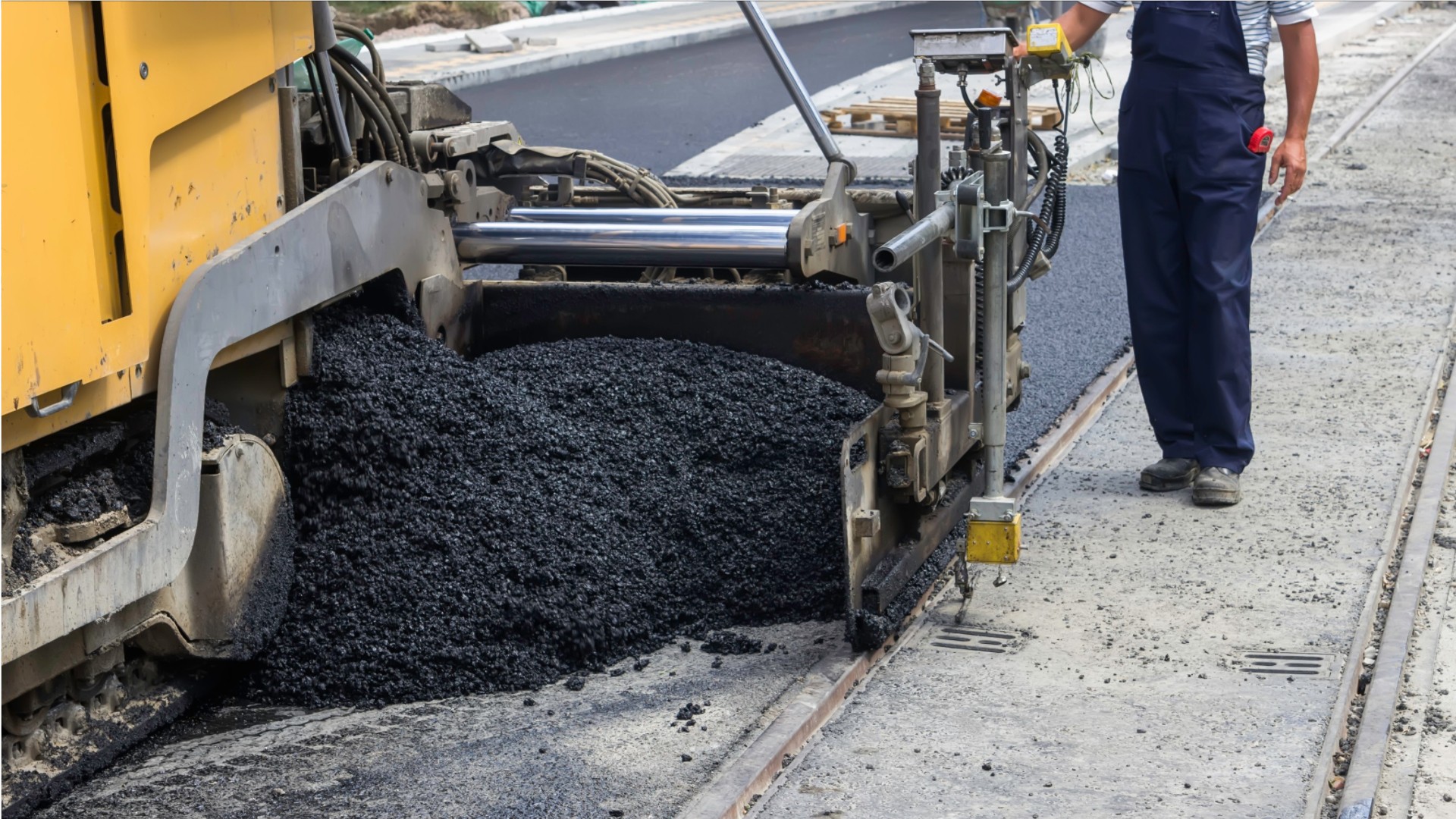
Operate one or several types of power construction equipment, such as motor graders, bulldozers, scrapers, compressors, pumps, derricks, shovels, tractors, or front-end loaders to excavate, move, and grade earth, erect structures, or pour concrete or other hard surface pavement. May repair and maintain equipment in addition to other duties.
Yearly Salary
| High: | $87K |
| Median: | $49K |
| Low: | $32K |
Demand

Core Tasks
- Learn and follow safety regulations.
- Check fuel supplies at sites to ensure adequate availability.
- Take actions to avoid potential hazards or obstructions, such as utility lines, other equipment, other workers, or falling objects.
- Start engines, move throttles, switches, or levers, or depress pedals to operate machines, such as bulldozers, trench excavators, road graders, or backhoes.
- Coordinate machine actions with other activities, positioning or moving loads in response to hand or audio signals from crew members.
- Align machines, cutterheads, or depth gauge makers with reference stakes and guidelines or ground or position equipment, following hand signals of other workers.
- Locate underground services, such as pipes or wires, prior to beginning work.
- Repair and maintain equipment, making emergency adjustments or assisting with major repairs as necessary.
- Signal operators to guide movement of tractor-drawn machines.
- Load and move dirt, rocks, equipment, or other materials, using trucks, crawler tractors, power cranes, shovels, graders, or related equipment.
- Drive and maneuver equipment equipped with blades in successive passes over working areas to remove topsoil, vegetation, or rocks or to distribute and level earth or terrain.
- Operate tractors or bulldozers to perform such tasks as clearing land, mixing sludge, trimming backfills, or building roadways or parking lots.
- Talk to clients and study instructions, plans, or diagrams to establish work requirements.
- Monitor operations to ensure that health and safety standards are met.
- Connect hydraulic hoses, belts, mechanical linkages, or power takeoff shafts to tractors.
- Select and fasten bulldozer blades or other attachments to tractors, using hitches.
- Operate loaders to pull out stumps, rip asphalt or concrete, rough-grade properties, bury refuse, or perform general cleanup.
- Adjust handwheels and depress pedals to control attachments, such as blades, buckets, scrapers, or swing booms.
- Drive tractor-trailer trucks to move equipment from site to site.
- Keep records of material or equipment usage or problems encountered.
- Operate equipment to demolish or remove debris or to remove snow from streets, roads, or parking lots.
- Push other equipment when extra traction or assistance is required.
- Operate road watering, oiling, or rolling equipment, or street sealing equipment, such as chip spreaders.
- Operate compactors, scrapers, or rollers to level, compact, or cover refuse at disposal grounds.
- Test atmosphere for adequate oxygen or explosive conditions when working in confined spaces.
- Turn valves to control air or water output of compressors or pumps.
Technology Skills
Technology
Example
Hot Technology
Tools Used
Tool
Example
Top 10 Knowledge Required
Mechanical
72%
Knowledge of machines and tools, including their designs, uses, repair, and maintenance.
English Language
67%
Knowledge of the structure and content of the English language including the meaning and spelling of words, and rules of composition and grammar.
Public Safety and Security
63%
Knowledge of relevant equipment, policies, procedures, and strategies to promote effective local, state, or national security operations for the protection of people, data, property, and institutions.
Mathematics
57%
Knowledge of arithmetic, algebra, geometry, calculus, statistics, and their applications.
Administration and Management
56%
Knowledge of business and management principles involved in strategic planning, resource allocation, human resources modeling, leadership technique, production methods, and coordination of people and resources.
Customer and Personal Service
55%
Knowledge of principles and processes for providing customer and personal services. This includes customer needs assessment, meeting quality standards for services, and evaluation of customer satisfaction.
Education and Training
52%
Knowledge of principles and methods for curriculum and training design, teaching and instruction for individuals and groups, and the measurement of training effects.
Transportation
51%
Knowledge of principles and methods for moving people or goods by air, rail, sea, or road, including the relative costs and benefits.
Building and Construction
50%
Knowledge of materials, methods, and the tools involved in the construction or repair of houses, buildings, or other structures such as highways and roads.
Engineering and Technology
47%
Knowledge of the practical application of engineering science and technology. This includes applying principles, techniques, procedures, and equipment to the design and production of various goods and services.
Top 10 Skills
Operation and Control
83%
Controlling operations of equipment or systems.
Equipment Maintenance
65%
Performing routine maintenance on equipment and determining when and what kind of maintenance is needed.
Operations Monitoring
65%
Watching gauges, dials, or other indicators to make sure a machine is working properly.
Monitoring
63%
Monitoring/Assessing performance of yourself, other individuals, or organizations to make improvements or take corrective action.
Active Listening
60%
Giving full attention to what other people are saying, taking time to understand the points being made, asking questions as appropriate, and not interrupting at inappropriate times.
Time Management
60%
Managing one's own time and the time of others.
Troubleshooting
60%
Determining causes of operating errors and deciding what to do about it.
Active Learning
58%
Understanding the implications of new information for both current and future problem-solving and decision-making.
Complex Problem Solving
58%
Identifying complex problems and reviewing related information to develop and evaluate options and implement solutions.
Coordination
58%
Adjusting actions in relation to others' actions.
Top 10 Abilities
Control Precision
83%
The ability to quickly and repeatedly adjust the controls of a machine or a vehicle to exact positions.
Depth Perception
80%
The ability to judge which of several objects is closer or farther away from you, or to judge the distance between you and an object.
Multilimb Coordination
78%
The ability to coordinate two or more limbs (for example, two arms, two legs, or one leg and one arm) while sitting, standing, or lying down. It does not involve performing the activities while the whole body is in motion.
Near Vision
78%
The ability to see details at close range (within a few feet of the observer).
Far Vision
73%
The ability to see details at a distance.
Rate Control
70%
The ability to time your movements or the movement of a piece of equipment in anticipation of changes in the speed and/or direction of a moving object or scene.
Reaction Time
68%
The ability to quickly respond (with the hand, finger, or foot) to a signal (sound, light, picture) when it appears.
Arm-Hand Steadiness
65%
The ability to keep your hand and arm steady while moving your arm or while holding your arm and hand in one position.
Problem Sensitivity
65%
The ability to tell when something is wrong or is likely to go wrong. It does not involve solving the problem, only recognizing that there is a problem.
Response Orientation
65%
The ability to choose quickly between two or more movements in response to two or more different signals (lights, sounds, pictures). It includes the speed with which the correct response is started with the hand, foot, or other body part.
Top 10 Work Activities
Controlling Machines and Processes
93%
Using either control mechanisms or direct physical activity to operate machines or processes (not including computers or vehicles).
Operating Vehicles, Mechanized Devices, or Equipment
93%
Running, maneuvering, navigating, or driving vehicles or mechanized equipment, such as forklifts, passenger vehicles, aircraft, or watercraft.
Monitoring Processes, Materials, or Surroundings
92%
Monitoring and reviewing information from materials, events, or the environment, to detect or assess problems.
Getting Information
90%
Observing, receiving, and otherwise obtaining information from all relevant sources.
Making Decisions and Solving Problems
90%
Analyzing information and evaluating results to choose the best solution and solve problems.
Inspecting Equipment, Structures, or Materials
88%
Inspecting equipment, structures, or materials to identify the cause of errors or other problems or defects.
Identifying Objects, Actions, and Events
86%
Identifying information by categorizing, estimating, recognizing differences or similarities, and detecting changes in circumstances or events.
Repairing and Maintaining Mechanical Equipment
83%
Servicing, repairing, adjusting, and testing machines, devices, moving parts, and equipment that operate primarily on the basis of mechanical (not electronic) principles.
Evaluating Information to Determine Compliance with Standards
82%
Using relevant information and individual judgment to determine whether events or processes comply with laws, regulations, or standards.
Communicating with Supervisors, Peers, or Subordinates
80%
Providing information to supervisors, co-workers, and subordinates by telephone, in written form, e-mail, or in person.
Detailed Work Activities
- Update job related knowledge or skills.
- Position construction or extraction equipment.
- Operate heavy-duty construction or installation equipment.
- Operate equipment or vehicles to clear construction sites or move materials.
- Locate equipment or materials in need of repair or replacement.
- Monitor construction operations.
- Load or unload materials used in construction or extraction.
- Move construction or extraction materials to locations where they are needed.
- Maintain construction tools or equipment.
- Install equipment attachments or components.
- Select construction equipment.
- Test air quality at work sites.
- Compact materials to create level bases.
- Review blueprints or specifications to determine work requirements.
- Communicate with clients about products, procedures, and policies.
- Signal equipment operators to indicate proper equipment positioning.
- Operate road-surfacing equipment.
- Assist skilled construction or extraction personnel.
- Record operational or environmental data.
- Drive trucks or truck-mounted equipment.
- Operate pumps or compressors.
- Remove debris or vegetation from work sites.
Education
Interests
Realistic
100%
Work involves designing, building, or repairing of equipment, materials, or structures, engaging in physical activity, or working outdoors. Realistic occupations are often associated with engineering, mechanics and electronics, construction, woodworking, transportation, machine operation, agriculture, animal services, physical or manual labor, athletics, or protective services.
Conventional
56%
Work involves following procedures and regulations to organize information or data, typically in a business setting. Conventional occupations are often associated with office work, accounting, mathematics/statistics, information technology, finance, or human resources.
Investigative
42%
Work involves studying and researching non-living objects, living organisms, disease or other forms of impairment, or human behavior. Investigative occupations are often associated with physical, life, medical, or social sciences, and can be found in the fields of humanities, mathematics/statistics, information technology, or health care service.
Enterprising
18%
Work involves managing, negotiating, marketing, or selling, typically in a business setting, or leading or advising people in political and legal situations. Enterprising occupations are often associated with business initiatives, sales, marketing/advertising, finance, management/administration, professional advising, public speaking, politics, or law.
Social
17%
Work involves helping, teaching, advising, assisting, or providing service to others. Social occupations are often associated with social, health care, personal service, teaching/education, or religious activities.
Artistic
15%
Work involves creating original visual artwork, performances, written works, food, or music for a variety of media, or applying artistic principles to the design of various objects and materials. Artistic occupations are often associated with visual arts, applied arts and design, performing arts, music, creative writing, media, or culinary art.
Work Values
Support
72%
Occupations that satisfy this work value offer supportive management that stands behind employees. Corresponding needs are Company Policies, Supervision: Human Relations and Supervision: Technical.
Relationships
58%
Occupations that satisfy this work value allow employees to provide service to others and work with co-workers in a friendly non-competitive environment. Corresponding needs are Co-workers, Moral Values and Social Service.
Working Conditions
53%
Occupations that satisfy this work value offer job security and good working conditions. Corresponding needs are Activity, Compensation, Independence, Security, Variety and Working Conditions.
Achievement
48%
Occupations that satisfy this work value are results oriented and allow employees to use their strongest abilities, giving them a feeling of accomplishment. Corresponding needs are Ability Utilization and Achievement.
Independence
43%
Occupations that satisfy this work value allow employees to work on their own and make decisions. Corresponding needs are Creativity, Responsibility and Autonomy.
Recognition
39%
Occupations that satisfy this work value offer advancement, potential for leadership, and are often considered prestigious. Corresponding needs are Advancement, Authority, Recognition and Social Status.