Sailors and Marine Oilers
Overview
SaveJob Zone Two: Some Preparation Needed
Experience
Some previous work-related skill, knowledge, or experience is usually needed. For example, a teller would benefit from experience working directly with the public.
Education
These occupations usually require a high school diploma.
Job Training
Employees in these occupations need anywhere from a few months to one year of working with experienced employees. A recognized apprenticeship program may be associated with these occupations.
Examples
These occupations often involve using your knowledge and skills to help others. Examples include orderlies, counter and rental clerks, customer service representatives, security guards, upholsterers, tellers, and dental laboratory technicians.
Stand watch to look for obstructions in path of vessel, measure water depth, turn wheel on bridge, or use emergency equipment as directed by captain, mate, or pilot. Break out, rig, overhaul, and store cargo-handling gear, stationary rigging, and running gear. Perform a variety of maintenance tasks to preserve the painted surface of the ship and to maintain line and ship equipment. Must hold government-issued certification and tankerman certification when working aboard liquid-carrying vessels. Includes able seamen and ordinary seamen.

Yearly Salary
| High: | $78K |
| Median: | $44K |
| Low: | $25K |
Demand
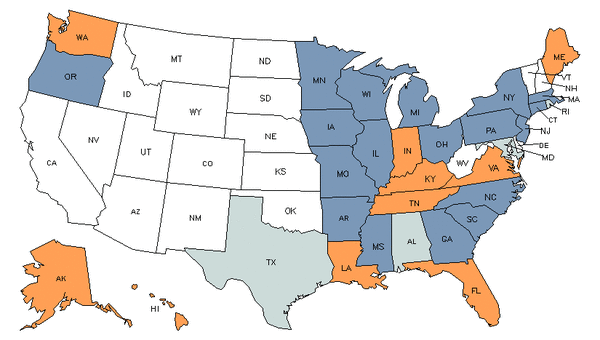
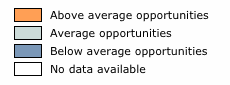
Core Tasks
- Tie barges together into tow units for tugboats to handle, inspecting barges periodically during voyages and disconnecting them when destinations are reached.
- Attach hoses and operate pumps to transfer substances to and from liquid cargo tanks.
- Handle lines to moor vessels to wharfs, to tie up vessels to other vessels, or to rig towing lines.
- Read pressure and temperature gauges or displays and record data in engineering logs.
- Maintain government-issued certifications, as required.
- Stand watch in ships' bows or bridge wings to look for obstructions in a ship's path or to locate navigational aids, such as buoys or lighthouses.
- Examine machinery to verify specified pressures or lubricant flows.
- Maintain a ship's engines under the direction of the ship's engineering officers.
- Break out, rig, and stow cargo-handling gear, stationary rigging, or running gear.
- Lubricate machinery, equipment, or engine parts, such as gears, shafts, or bearings.
- Stand by wheels when ships are on automatic pilot, and verify accuracy of courses, using magnetic compasses.
- Lower and man lifeboats when emergencies occur.
- Steer ships under the direction of commanders or navigating officers or direct helmsmen to steer, following designated courses.
- Relay specified signals to other ships, using visual signaling devices, such as blinker lights or semaphores.
- Sweep, mop, and wash down decks to remove oil, dirt, and debris, using brooms, mops, brushes, and hoses.
- Overhaul lifeboats or lifeboat gear and lower or raise lifeboats with winches or falls.
- Splice and repair ropes, wire cables, or cordage, using marlinespikes, wire cutters, twine, and hand tools.
- Chip and clean rust spots on decks, superstructures, or sides of ships, using wire brushes and hand or air chipping machines.
- Load or unload materials, vehicles, or passengers from vessels.
- Stand gangway watches to prevent unauthorized persons from boarding ships while in port.
- Record data in ships' logs, such as weather conditions or distances traveled.
- Operate, maintain, or repair ship equipment, such as winches, cranes, derricks, or weapons system.
- Provide engineers with assistance in repairing or adjusting machinery.
- Paint or varnish decks, superstructures, lifeboats, or sides of ships.
- Give directions to crew members engaged in cleaning wheelhouses or quarterdecks.
- Measure depth of water in shallow or unfamiliar waters, using leadlines, and telephone or shout depth information to vessel bridges.
- Clean and polish wood trim, brass, or other metal parts.
- Participate in shore patrols.
Technology Skills
Technology
Example
Hot Technology
Tools Used
Tool
Example
Top 10 Knowledge Required
Public Safety and Security
65%
Knowledge of relevant equipment, policies, procedures, and strategies to promote effective local, state, or national security operations for the protection of people, data, property, and institutions.
Transportation
62%
Knowledge of principles and methods for moving people or goods by air, rail, sea, or road, including the relative costs and benefits.
Mechanical
60%
Knowledge of machines and tools, including their designs, uses, repair, and maintenance.
Administration and Management
59%
Knowledge of business and management principles involved in strategic planning, resource allocation, human resources modeling, leadership technique, production methods, and coordination of people and resources.
Education and Training
59%
Knowledge of principles and methods for curriculum and training design, teaching and instruction for individuals and groups, and the measurement of training effects.
English Language
57%
Knowledge of the structure and content of the English language including the meaning and spelling of words, and rules of composition and grammar.
Mathematics
56%
Knowledge of arithmetic, algebra, geometry, calculus, statistics, and their applications.
Customer and Personal Service
53%
Knowledge of principles and processes for providing customer and personal services. This includes customer needs assessment, meeting quality standards for services, and evaluation of customer satisfaction.
Administrative
50%
Knowledge of administrative and office procedures and systems such as word processing, managing files and records, stenography and transcription, designing forms, and workplace terminology.
Production and Processing
50%
Knowledge of raw materials, production processes, quality control, costs, and other techniques for maximizing the effective manufacture and distribution of goods.
Top 10 Skills
Operations Monitoring
78%
Watching gauges, dials, or other indicators to make sure a machine is working properly.
Operation and Control
73%
Controlling operations of equipment or systems.
Monitoring
65%
Monitoring/Assessing performance of yourself, other individuals, or organizations to make improvements or take corrective action.
Active Listening
63%
Giving full attention to what other people are saying, taking time to understand the points being made, asking questions as appropriate, and not interrupting at inappropriate times.
Critical Thinking
63%
Using logic and reasoning to identify the strengths and weaknesses of alternative solutions, conclusions, or approaches to problems.
Repairing
63%
Repairing machines or systems using the needed tools.
Troubleshooting
63%
Determining causes of operating errors and deciding what to do about it.
Complex Problem Solving
60%
Identifying complex problems and reviewing related information to develop and evaluate options and implement solutions.
Coordination
60%
Adjusting actions in relation to others' actions.
Judgment and Decision Making
60%
Considering the relative costs and benefits of potential actions to choose the most appropriate one.
Top 10 Abilities
Far Vision
80%
The ability to see details at a distance.
Control Precision
78%
The ability to quickly and repeatedly adjust the controls of a machine or a vehicle to exact positions.
Depth Perception
75%
The ability to judge which of several objects is closer or farther away from you, or to judge the distance between you and an object.
Oral Comprehension
75%
The ability to listen to and understand information and ideas presented through spoken words and sentences.
Perceptual Speed
75%
The ability to quickly and accurately compare similarities and differences among sets of letters, numbers, objects, pictures, or patterns. The things to be compared may be presented at the same time or one after the other. This ability also includes comparing a presented object with a remembered object.
Problem Sensitivity
75%
The ability to tell when something is wrong or is likely to go wrong. It does not involve solving the problem, only recognizing that there is a problem.
Arm-Hand Steadiness
73%
The ability to keep your hand and arm steady while moving your arm or while holding your arm and hand in one position.
Auditory Attention
73%
The ability to focus on a single source of sound in the presence of other distracting sounds.
Multilimb Coordination
73%
The ability to coordinate two or more limbs (for example, two arms, two legs, or one leg and one arm) while sitting, standing, or lying down. It does not involve performing the activities while the whole body is in motion.
Manual Dexterity
70%
The ability to quickly move your hand, your hand together with your arm, or your two hands to grasp, manipulate, or assemble objects.
Top 10 Work Activities
Inspecting Equipment, Structures, or Materials
95%
Inspecting equipment, structures, or materials to identify the cause of errors or other problems or defects.
Identifying Objects, Actions, and Events
92%
Identifying information by categorizing, estimating, recognizing differences or similarities, and detecting changes in circumstances or events.
Monitoring Processes, Materials, or Surroundings
92%
Monitoring and reviewing information from materials, events, or the environment, to detect or assess problems.
Controlling Machines and Processes
90%
Using either control mechanisms or direct physical activity to operate machines or processes (not including computers or vehicles).
Getting Information
90%
Observing, receiving, and otherwise obtaining information from all relevant sources.
Handling and Moving Objects
85%
Using hands and arms in handling, installing, positioning, and moving materials, and manipulating things.
Making Decisions and Solving Problems
85%
Analyzing information and evaluating results to choose the best solution and solve problems.
Repairing and Maintaining Mechanical Equipment
85%
Servicing, repairing, adjusting, and testing machines, devices, moving parts, and equipment that operate primarily on the basis of mechanical (not electronic) principles.
Estimating the Quantifiable Characteristics of Products, Events, or Information
81%
Estimating sizes, distances, and quantities; or determining time, costs, resources, or materials needed to perform a work activity.
Communicating with Supervisors, Peers, or Subordinates
79%
Providing information to supervisors, co-workers, and subordinates by telephone, in written form, e-mail, or in person.
Detailed Work Activities
- Inspect material-moving equipment to detect problems.
- Secure watercraft to docks, wharves or other vessels.
- Connect hoses to equipment or machinery.
- Control pumps or pumping equipment.
- Monitor equipment gauges or displays to ensure proper operation.
- Record operational or production data.
- Monitor surroundings to detect potential hazards.
- Maintain professional knowledge or certifications.
- Inspect equipment to ensure proper functioning.
- Maintain watercraft engines or machinery.
- Set up material handling gear or equipment, such as rigging, packaging, or temporary structures.
- Assist others during emergencies.
- Clean vessels or marine equipment.
- Maintain material moving equipment in good working condition.
- Load shipments, belongings, or materials.
- Operate cranes, hoists, or other moving or lifting equipment.
- Paint surfaces or equipment.
- Direct maintenance or repair activities.
- Verify information or specifications.
- Operate ships or other watercraft.
- Signal others to coordinate vehicle movement.
- Record operational details of travel.
- Measure the level or depth of water or other liquids.
Education
Interests
Realistic
100%
Work involves designing, building, or repairing of equipment, materials, or structures, engaging in physical activity, or working outdoors. Realistic occupations are often associated with engineering, mechanics and electronics, construction, woodworking, transportation, machine operation, agriculture, animal services, physical or manual labor, athletics, or protective services.
Conventional
57%
Work involves following procedures and regulations to organize information or data, typically in a business setting. Conventional occupations are often associated with office work, accounting, mathematics/statistics, information technology, finance, or human resources.
Investigative
38%
Work involves studying and researching non-living objects, living organisms, disease or other forms of impairment, or human behavior. Investigative occupations are often associated with physical, life, medical, or social sciences, and can be found in the fields of humanities, mathematics/statistics, information technology, or health care service.
Enterprising
35%
Work involves managing, negotiating, marketing, or selling, typically in a business setting, or leading or advising people in political and legal situations. Enterprising occupations are often associated with business initiatives, sales, marketing/advertising, finance, management/administration, professional advising, public speaking, politics, or law.
Social
18%
Work involves helping, teaching, advising, assisting, or providing service to others. Social occupations are often associated with social, health care, personal service, teaching/education, or religious activities.
Artistic
15%
Work involves creating original visual artwork, performances, written works, food, or music for a variety of media, or applying artistic principles to the design of various objects and materials. Artistic occupations are often associated with visual arts, applied arts and design, performing arts, music, creative writing, media, or culinary art.
Work Values
Support
81%
Occupations that satisfy this work value offer supportive management that stands behind employees. Corresponding needs are Company Policies, Supervision: Human Relations and Supervision: Technical.
Achievement
53%
Occupations that satisfy this work value are results oriented and allow employees to use their strongest abilities, giving them a feeling of accomplishment. Corresponding needs are Ability Utilization and Achievement.
Relationships
53%
Occupations that satisfy this work value allow employees to provide service to others and work with co-workers in a friendly non-competitive environment. Corresponding needs are Co-workers, Moral Values and Social Service.
Working Conditions
46%
Occupations that satisfy this work value offer job security and good working conditions. Corresponding needs are Activity, Compensation, Independence, Security, Variety and Working Conditions.
Independence
39%
Occupations that satisfy this work value allow employees to work on their own and make decisions. Corresponding needs are Creativity, Responsibility and Autonomy.
Recognition
39%
Occupations that satisfy this work value offer advancement, potential for leadership, and are often considered prestigious. Corresponding needs are Advancement, Authority, Recognition and Social Status.